Insulation is the heart of the jacket, and the spec is easier to read than most people assume. Here is the vocabulary first, then the decision rule.
Down is the lofted undercoating of waterfowl, and its job is to trap still air in clusters of down. It is measured in two numbers. Fill power measures how much volume a set weight occupies — essentially how fluffy and compressible it is. Fill weight measures how much of it is in the jacket — essentially how warm. Both matter, and they are independent: a jacket with 800-fill down at 200 grams may be warmer than one with 550-fill at 400 grams, and will be much lighter and compressible.
Synthetic insulation is polyester fibres spun into a lofted structure that mimics down. It is bulkier for the same warmth, compresses less efficiently, and is cheaper — but it is dramatically more forgiving of moisture. A soaked down jacket loses its loft and stays lost until professionally dried; a soaked synthetic jacket can be wrung out and hung up overnight.
Loft is the height of the insulation when uncompressed, and it is what you feel as a jacket's puffiness. Hydrophobic down is treated so it repels moisture rather than absorbing it, and it is the single most useful thing to look for if you live somewhere wet or if you intend to wash the jacket.
How to read fill power in practice
| Fill power | What it means | Where you will meet it |
|---|
| 450-550 | Mid-grade, durable, serviceable | Most budget and mainstream puffer jackets |
| 550-650 | Warm and light for the money | The sweet spot for a real winter jacket |
| 650-750 | High grade, packs very small | Technical and ski jackets |
| 800+ | Expedition grade, very expensive per gram | Lightweight mountaineering and travel kit |
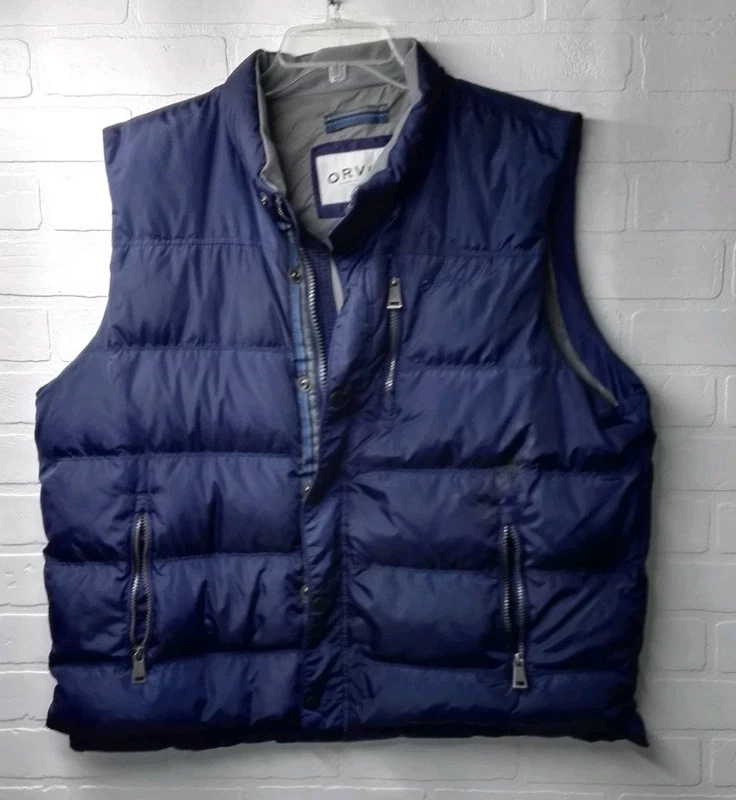
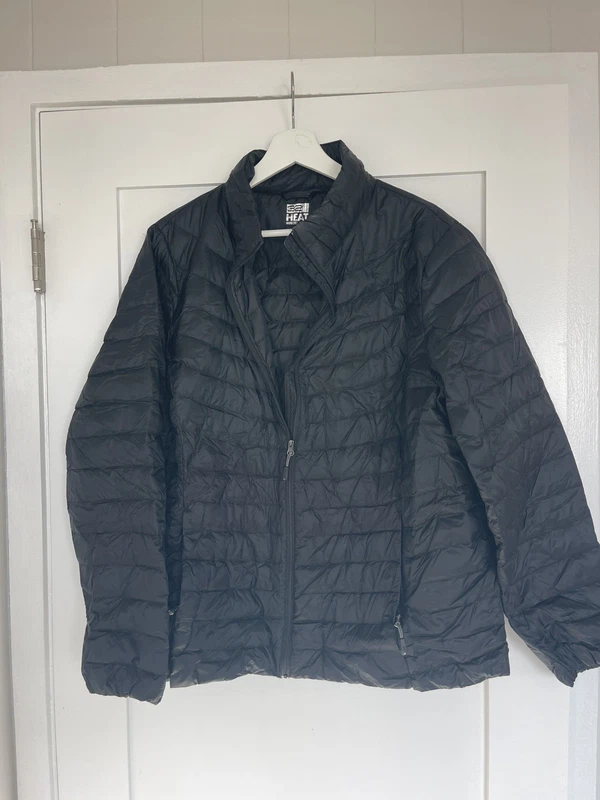
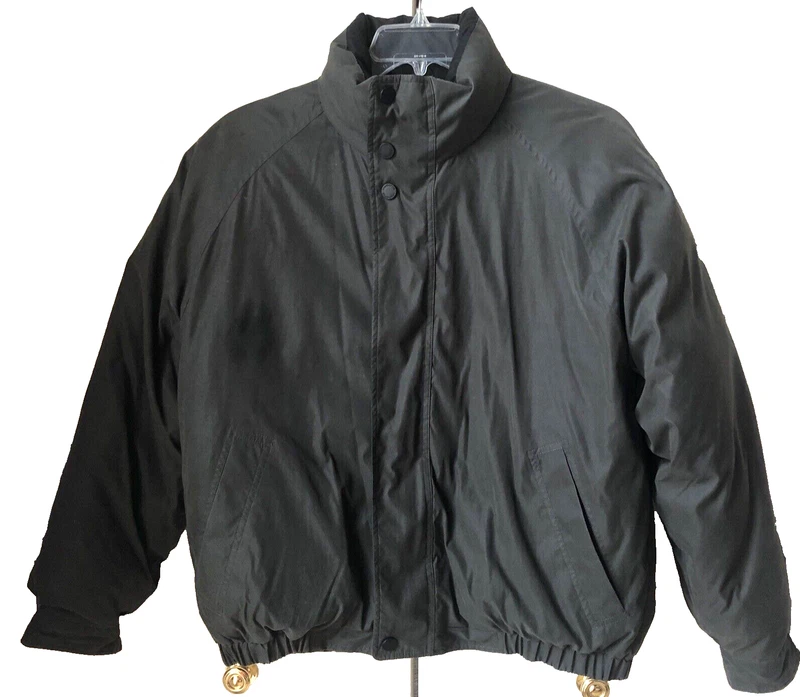
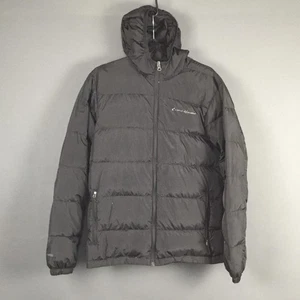
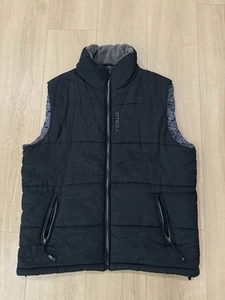
The listings below are typical rather than exotic. A confirmed at $32.97 states a shell of 100% nylon and a fill of 90% down and 10% feathers, with two front zip pockets, a zip front closure and a machine-wash-cold instruction — a complete, honest specification for under $35. An at $36.19 gives a 100% nylon outer shell with a filling of 80% duck down and 20% feathers. Neither listing tells you a fill power, which is a limitation, but the shell and fill ratios alone tell you more than an unbranded jacket described only as insulated.
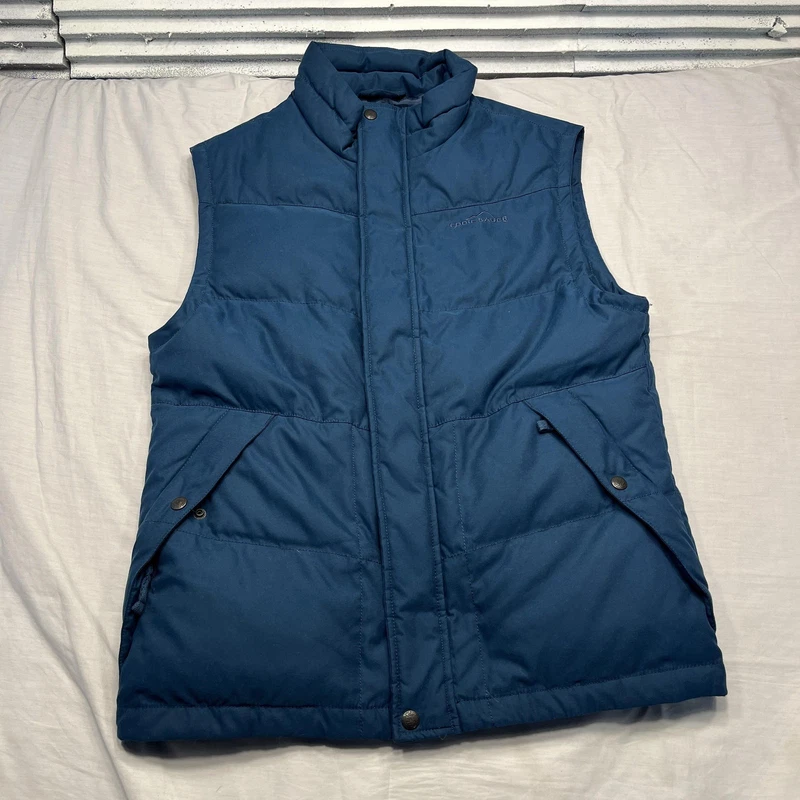
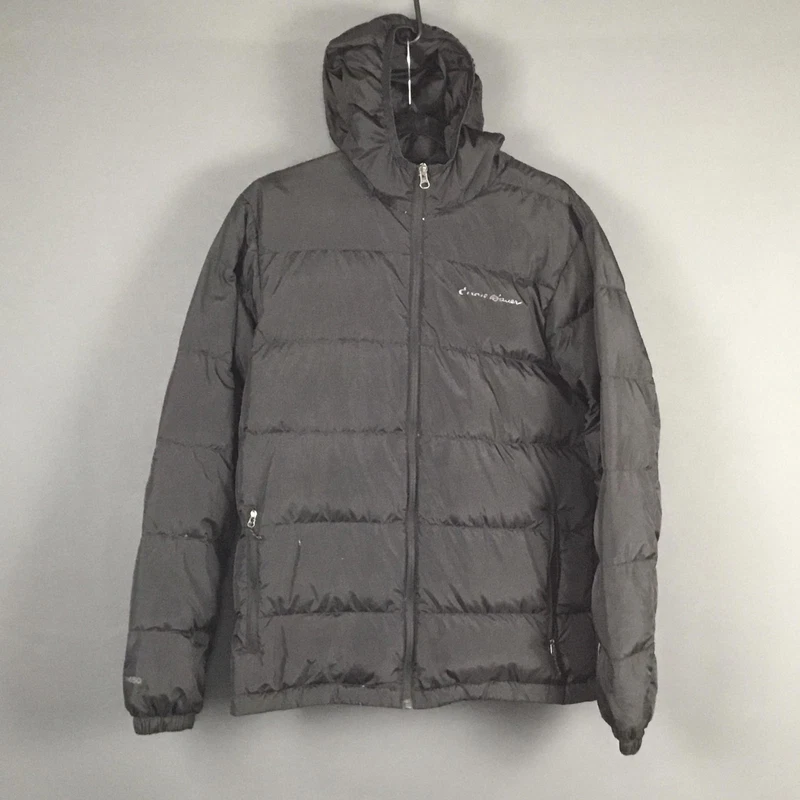
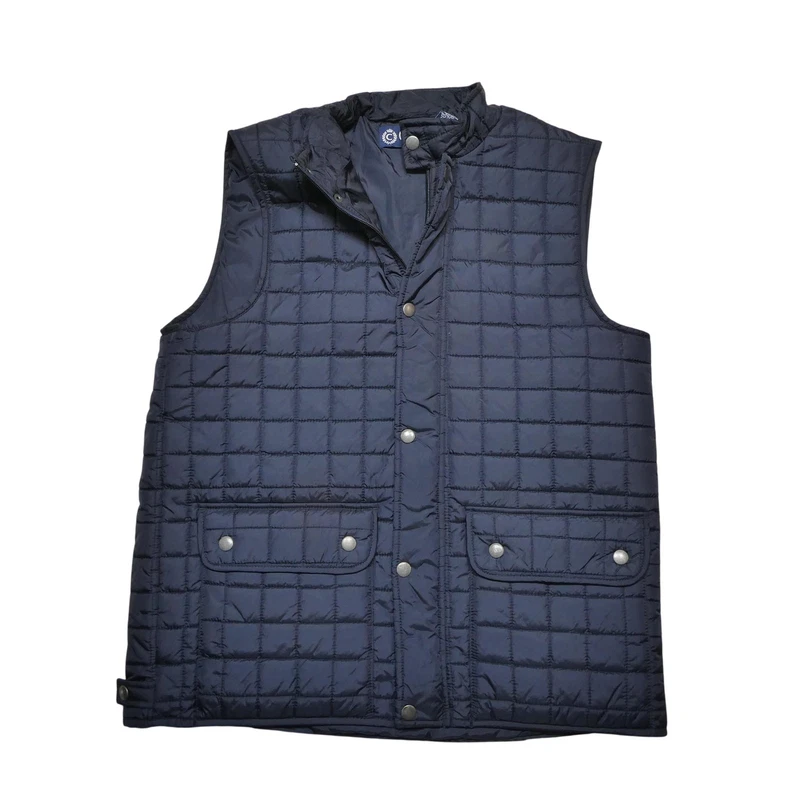
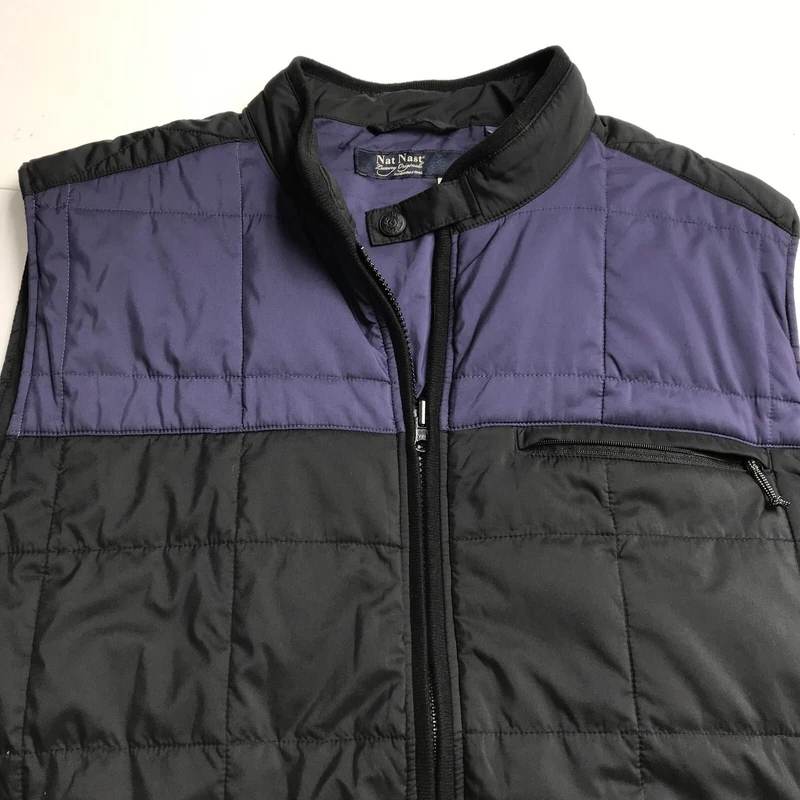
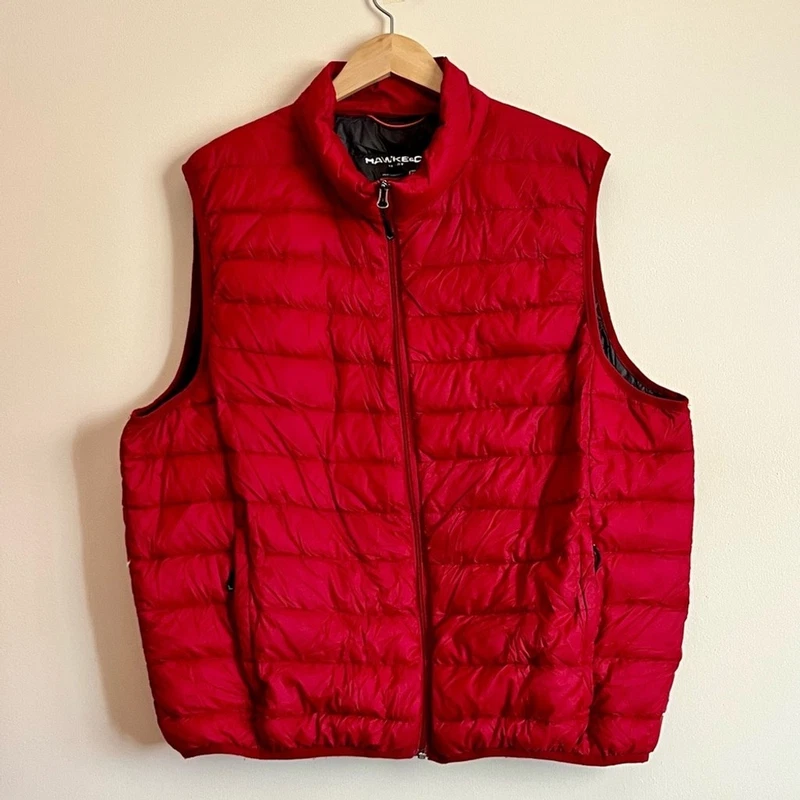
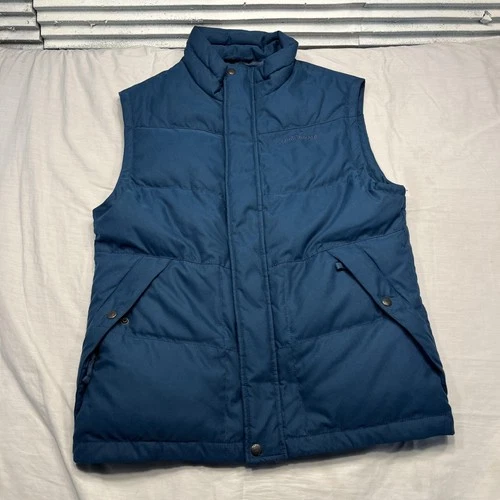
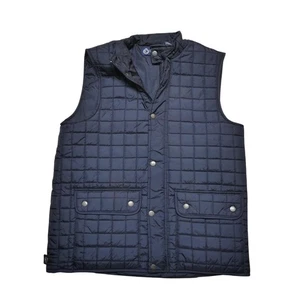
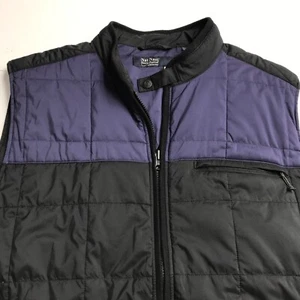
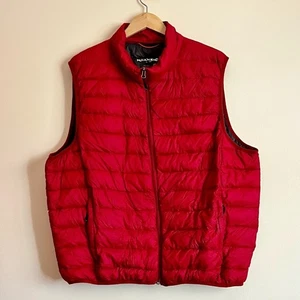
Where a seller does give you the number, it is usually worth the money: an confirmed at $54.99 is described as 550 fill power, gently worn, with all snaps and zippers working and no rips, holes or stains noted. Note that this is a vest — the same fill, a fraction of the coverage, and a correspondingly smaller warmth claim. An in a men's medium at $33.35 gives the full spec: 100% polyester shell, 100% polyester lining, insulation of 80% down and 20% waterfowl. That EB650 naming is the fill-power hint, and 650 is a genuinely good specification for the money.
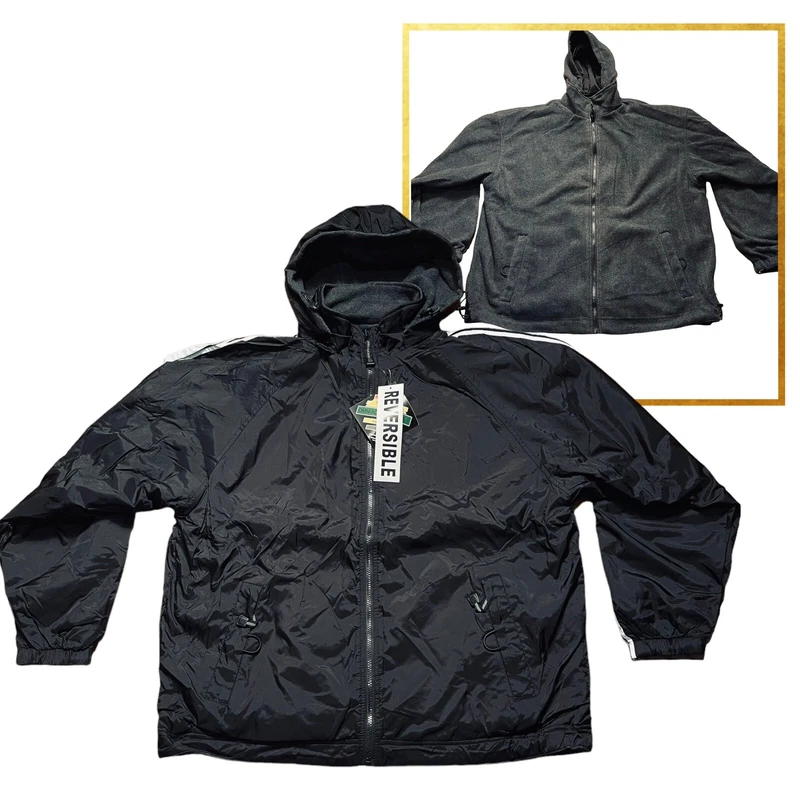
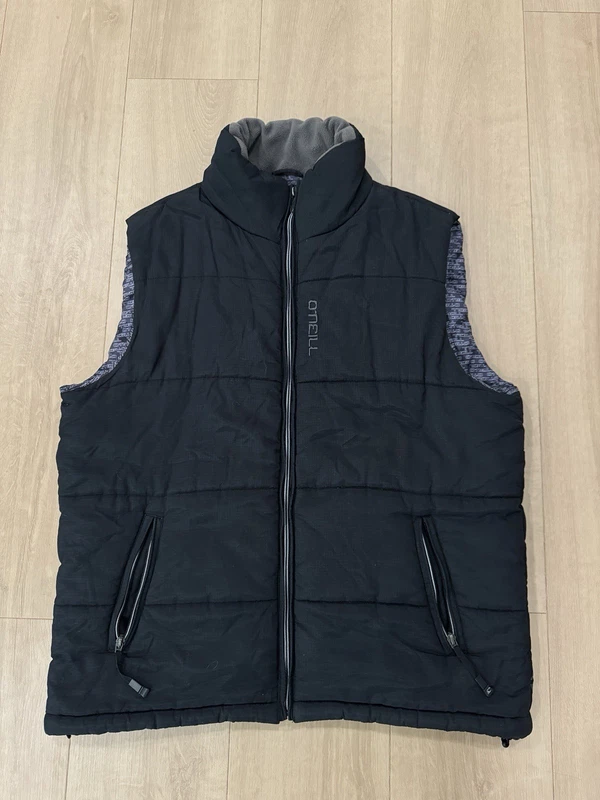
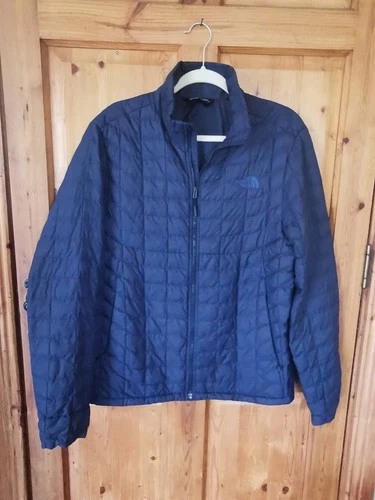
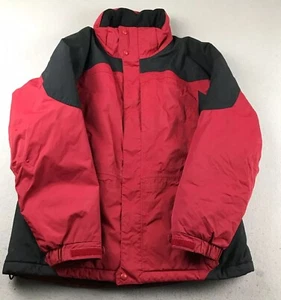
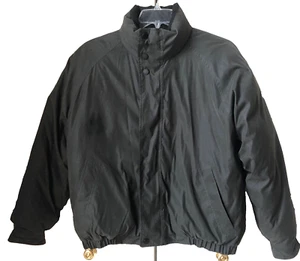
The decision rule, in one sentence: if your jacket will get wet, buy synthetic or treated down; if your jacket will stay dry and you want the most warmth for the least bulk, buy down. For a dry-climate city winter, down wins. For a wet one — and a wet one includes most of the UK — synthetic wins, which is why so many UK winter jackets are synthetic and why the is a safer buy than a comparably priced down jacket for most people.
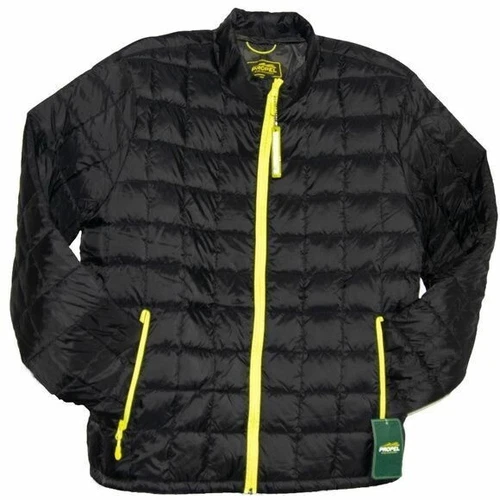








 $59.78