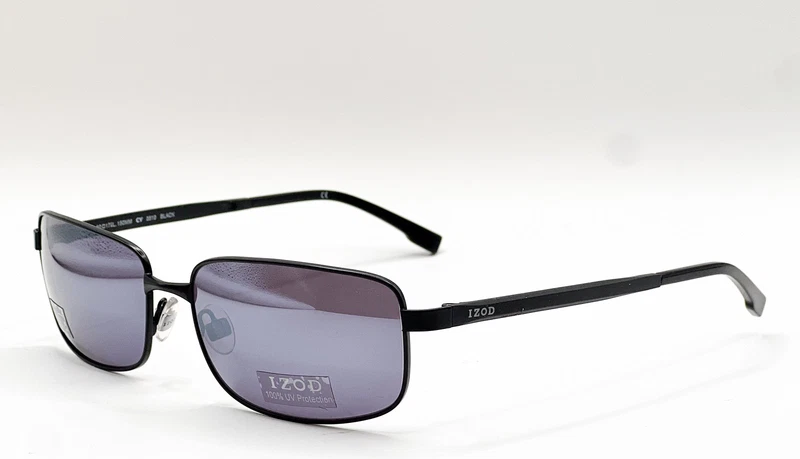
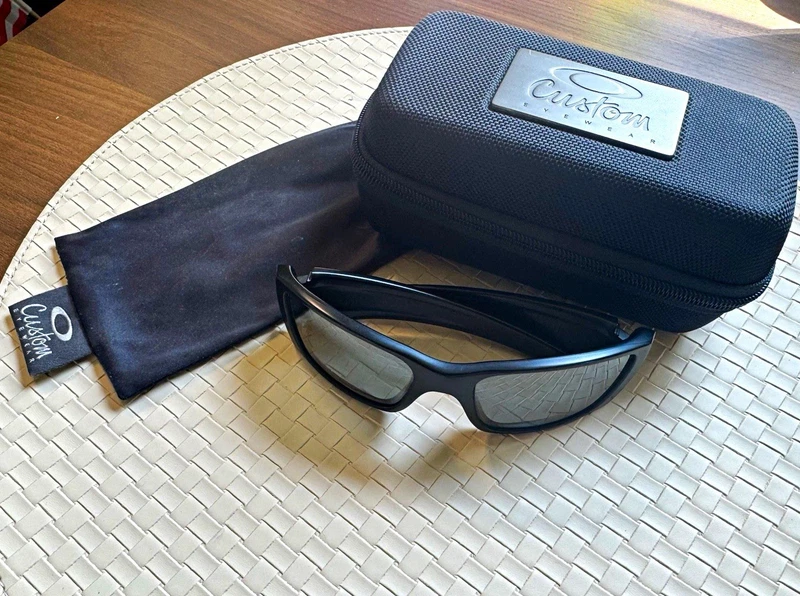
This is the second question, and it is the one people get wrong most often, usually by assuming polarized is automatically better. It is not — it is better for a specific set of problems and worse for a specific set of others.
What polarization actually fixes
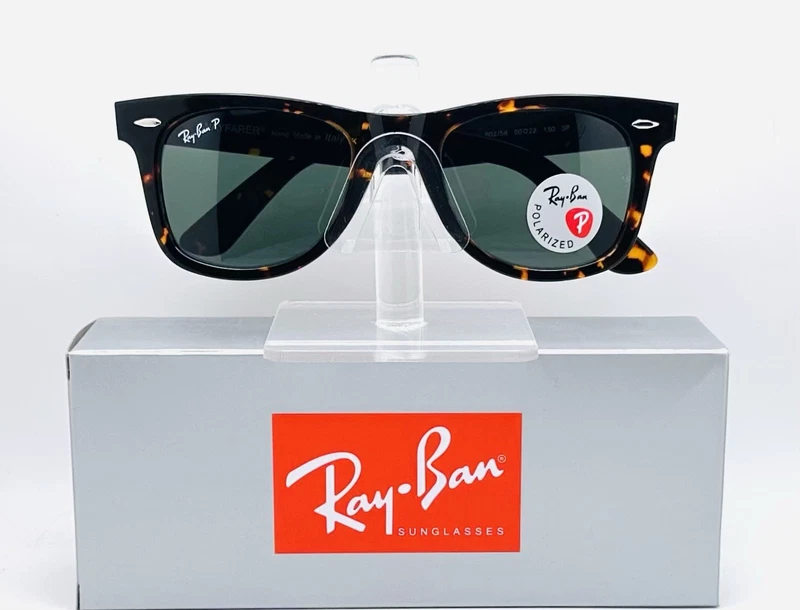
A polarized lens filters light that has bounced off a horizontal surface and become horizontally aligned: wet road, water, a car hood, a windscreen, a snow field, a desktop. That reflected glare is the harsh, disorienting kind that squints you up and washes out contrast. A polarized lens cuts it dramatically, which is why polarized glasses are the professional choice for driving, cycling, water sports and snow.
The cost is equally concrete. Polarized lenses block roughly half the light coming from an LCD screen, so a phone or a dashboard readout goes dark and usually shows colour artefacts. You cannot read a phone through a polarized lens without tilting your head, and tilting your head defeats the purpose if you are the driver. If you use navigation in the car, polarization is a genuine daily inconvenience rather than a theoretical one.
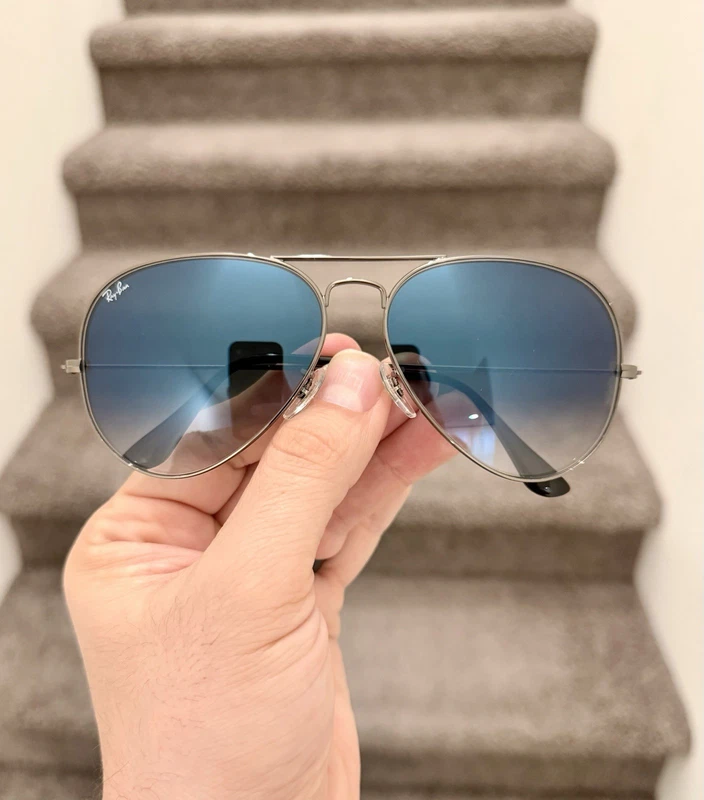
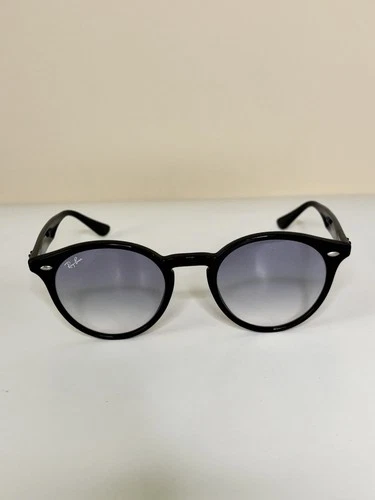
How to tell from a listing: polarization is almost always in the title, because it is the seller's main selling point. In our sample the , the and the all state it in the title, while the does not — that pair is a gradient, which is a different feature entirely.
Gradient, mirror and photochromic: the middle options
Gradient lenses are dark at the top and clear at the bottom. Because your eyes look slightly downward when you drive, a gradient keeps the road and dashboard legible while blocking the sky. It is the classic driving tint and the reason gradient lenses were invented. The RB3025 above is a blue gradient in a metal aviator frame at $89, described in the listing as shipping with a soft generic case only — worth knowing, because a $89 pair with no proper case is $89 plus whatever you spend on a case later.
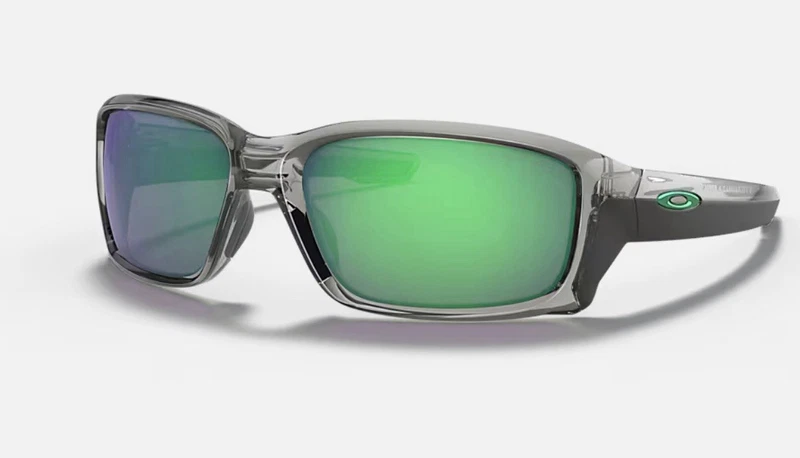
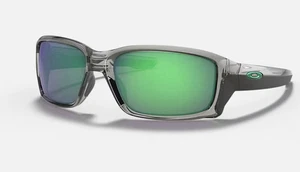
Mirror-coated lenses reflect a thin metallic layer on the surface. Mirrors reject more light per unit thickness than a dyed tint, which is why they dominate water sports, and the is described with a jade green Iridium lens, Iridium being Oakley's traditional mirror coating. Mirrors show you your own face, and they show every scratch, so they are a performance choice with a real aesthetic cost.
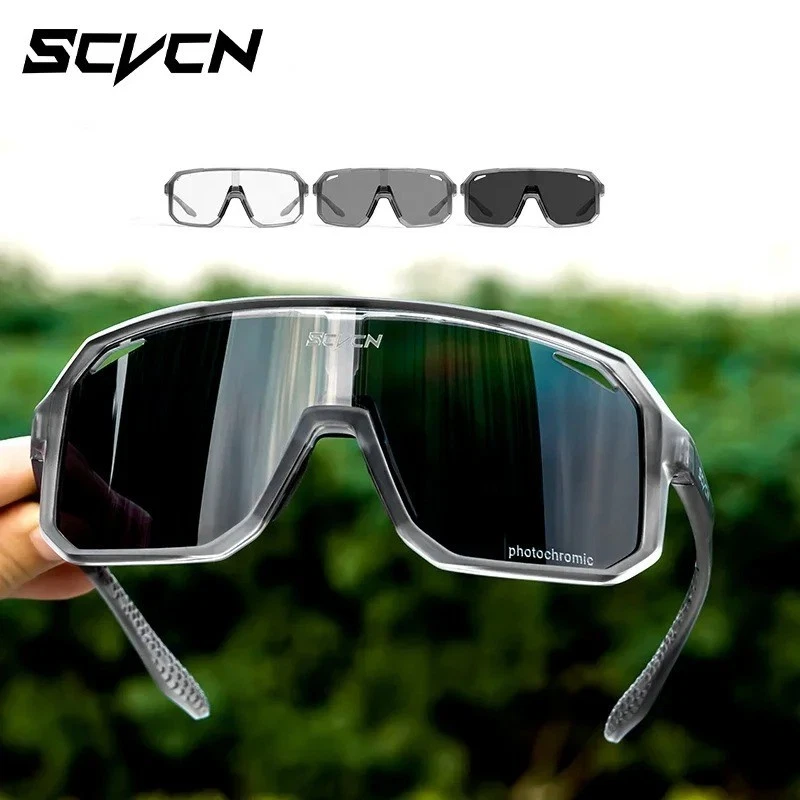
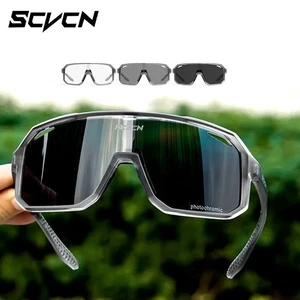
Photochromic lenses darken in response to UV and clear when it goes away. This is the one option that adapts, and the are described with UV400 photochromic lenses for road and mountain biking. The trade-offs are real: they take a minute or two to darken, they do not darken much inside a car because the windscreen blocks the UV that triggers them, and where they are combined with polarization the polarization is usually weaker than on a dedicated polarized lens. For a rider moving between forest and open road, though, nothing else on this list does what they do.
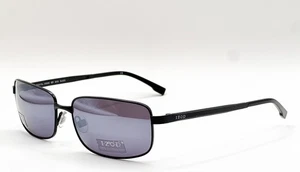
One category worth naming so you can rule it out: bi-focal reading sunglasses put a magnified section in the lower part of the lens. The is described as polarized with a +2.50 magnification and grey lenses. These are a real optical aid for anyone over forty who reads outdoors, and they are not a style accessory — buy them if you need the magnification, skip them if you do not.


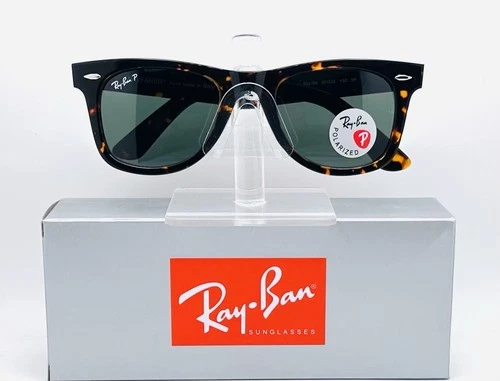








 $68.49