Tahabay icon tahabay

Spinning vs Baitcasting Reels — Which Is Right for You?

Spinning vs baitcasting reel: how each casts, which line it lays and what it really costs on eBay, with live prices confirmed September 30, 2026.

Penn Battle II 5000 Spinning Reel

Almost every angler eventually asks the same question, usually after watching somebody else land a fish on a reel that looks nothing like theirs: spinning vs baitcasting reel — which one should I actually buy? The answer depends far less on skill than the marketing implies and much more on the lures you throw and the water you fish. It also depends on price, and the two categories are not close. A workable spinning reel shows up on eBay in the low twenties, while a credible low-profile baitcaster rarely drops below the forties.

Every price in this guide was pulled from live eBay listings with prices confirmed on September 30, 2026, and the condition notes are the seller's own wording rather than ours. eBay prices change constantly and vary by seller, condition and shipping, so treat every figure here as a snapshot and re-check the current listing before you commit.

Part 1

Why Reel Type Matters More Than Reel Brand

The two designs share a purpose — winding line onto a spool at a controlled rate — and solve it with completely different geometry. Once you understand what each one physically does, the buying decision takes about ninety seconds, and it is the same decision for most people.

  • A spinning reel hangs below the rod. The spool rotates on a fixed vertical axis, the bail arm picks the line off the spool and swings across the line roller, and the drag is applied at a crank or lever. The line pays off directly in the direction the rod is pointing.
  • A baitcaster sits on top of the rod. The spool spins on a horizontal axis, perpendicular to the rod, and the line runs off the side of it onto a levelwind guide. The spool has to be physically fed or stopped, or it overruns.
  • A conventional reel is a third thing. The spool also spins horizontally, but you crank the handle yourself rather than spinning a handle, which is why offshore trolling reels and big-game reels work differently again.

That one difference — spool orientation — cascades into everything you care about. Cast weight, backlash risk, line capacity, whether you can use heavy fluorocarbon, how much torque your wrist feels, and how many years the thing will survive salt water. It is also why "baitcasting reel" and "spinning reel" are not interchangeable words in a classified listing even when both are technically called reels.

A fourth axis most comparisons skip: where the two categories sit in the used market. Spinning reels are cheap and unromantic, so they get sold constantly. Vintage baitcasters attract a collector market that keeps their prices high decades after the mechanism stopped improving.

Part 2

Spinning Reels: The Case for Effortlessness

The argument for spinning is not that they cast better. It is that they remove the two things beginners find hardest — spool control and backlash — from the list of things you have to learn. Flip the bail, point, retrieve. The spool never over-runs because nothing in the design lets it. Drag set wrong will still spool line, but it happens gently and in a way you can see and fix.

That simplicity buys you three concrete advantages. You can cast light lures that a baitcaster physically cannot handle cleanly. You can hang ultralight to heavy spinning rods without a size mismatch penalty, because the whole family scales. And you can use thin line — which matters enormously in clear water where 30 lb fluorocarbon looks like a rope.

Here is what the current eBay spread actually looks like.

Penn Battle II 5000 — $86.22, new

The at $86.22 new is the reference point for "one spinning reel that does everything." The listing is explicit about why it is popular: full metal body construction to hold gear alignment under load, an HT-100 drag described as silky smooth, and a Superline Spool for using thin super-braid without the line digging in. At $86.22 new it is a serious buy, and the size 5000 is the sensible all-rounder in the Penn range — big enough for bass and trout, small enough for a ultralight rod.

  • Pros: full metal body, spool design that actively supports modern super-braid, wide size range, sealed against enough weather to survive a season of rain.
  • Cons: $86.22 is real money in this category, and a spinning reel that size will feel heavy on a genuine ultralight rod.

PENN Spinfisher 850SSm — $79.99, pre-owned

The is listed at $79.99 as pre-owned, with a 4.7:1 gear ratio and a 15lb drag, in black and gold. The Spinfisher name has been on spinning reels for a very long time, and the 850 platform is the one that built the brand's saltwater reputation. A 4.7:1 retrieve is deliberately slower than a modern 6:1, which gives more torque for cranking heavy fish and less spool twist on light line.

  • Pros: slow 4.7:1 retrieve suits saltwater and heavy line, 15lb drag handles anything from inshore species to a decent pike, well-known platform with plenty of parts.
  • Cons: pre-owned and sold without stated warranty, and the listing is clear that condition should be judged from the photos.

LEW'S Mach Crush 300A — $112.99, new

The is specified at 6.2:1 with 11 bearings, in black and orange, and the seller is refreshingly transparent about why it is being resold: it was removed from a spinning combo where the rod tip broke in shipping. That is a good sign rather than a bad one — you are buying a new reel that lost its partner, not a used one with a story.

  • Pros: high 6.2:1 retrieve for fast, twitchy fishing, 11 bearings at a sub-$120 price, new condition.
  • Cons: 6.2:1 is a fast ratio and will spool you on light line if the drag is not trimmed, and there is no rod included to give the reel a purpose.

Okuma All Metal Spinning Reel 12+1BB — $91.55

The is the saltwater answer in this lineup, and the listing spells out why: 12+1 ball bearings, a 15kg maximum drag, an aluminium alloy line cup, stainless steel guide rods and a brass main shaft, described as anti-seawater construction and available across sizes 1000 to 5000. Brass shafts and stainless guides are the parts that actually corrode first, so specifying them is a real signal about intent.

  • Pros: genuine corrosion-resistant build, very high stated bearing count, 15kg drag, and a size range so you can match the reel to a light shore rod or a heavy boat rod.
  • Cons: no brand-specific mention of a sealed drag or a named drag material, so the "anti-seawater" claim is a construction description rather than a tested rating.

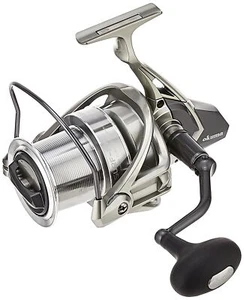
Okuma Surf 8K long casting reel — $167.99

The is the outlier in the spinning group at $167.99, with a 40lb drag, and the listing's pitch is entirely about one thing: distance, repeatedly. "The ultimate distance on every cast," and a lightweight body so you can hold it up all day. This is a surf and shore-casting reel, not a freshwater one.

  • Pros: huge stated drag figure for big surf fish, built around cast distance rather than casting accuracy, light enough for long sessions.
  • Cons: costs more than every other spinning reel here, and the size will feel wrong on anything under a 9ft surf rod.

Shakespeare & Wakeman BF-150 — $23.99, new

The listing is $23.99 for a pair, brand new, and the seller states plainly they are not in the retail package. That is an unusually honest description and it explains the price. The BF name is a budget line aimed at first-time buyers rather than anyone matching a specific rod.

  • Pros: two reels for the price of one premium model, brand new, enough to try spinning and keep a spare.
  • Cons: no stated bearing count, no stated drag figure, and no retail packaging means no box and no warranty trail.

Quantum Throttle 25 TH25C — $21.99, with a disclosed flaw

The is the most instructive listing in the guide, because the seller leads with the problem: "the cap does not close firmly." Underneath that it claims an 11-bearing build, a 16.1lb maximum drag, a 6.2:1 ratio and suitability for bass, trout and catfish in fresh and salt water. Read the defect, price the reel accordingly.

  • Pros: cheapest credible spinning reel in the guide, 11 bearings, 16.1lb drag, works in salt as well as fresh on paper.
  • Cons: the rotor cap does not latch, which is a daily-use annoyance and a reason to expect a return.
Penn Battle II 5000 Spinning Reel$86.22

Penn Battle II 5000 Spinning Reel

Penn Battle II 5000 — $86.22, new The at $86.22 new is the reference point for "one spinning reel that does everything." The listing is explicit about why it is popular: full metal body construction to hold gear alignmen

Buy it ifBuy it if you know your rod's lure weight and want one reel that covers bass, trout and panfish without a second purchase. Skip it if you are just starting out and a $25 mistake teaches you the same lesson more cheaply.
See the live listing →
PENN Spinfisher 850SSm Spinning Reel$79.99

PENN Spinfisher 850SSm Spinning Reel

PENN Spinfisher 850SSm — $79.99, pre-owned The is listed at $79.99 as pre-owned, with a 4.7:1 gear ratio and a 15lb drag, in black and gold.

Buy it ifBuy it if you are fishing saltwater or heavy inshore cover and want a slow gearing reel without paying new-money prices. Ask for a photo of the spool and drag before you pay.
See the live listing →
LEW'S Mach Crush Spinning Reel, size 300A$112.99

LEW'S Mach Crush Spinning Reel, size 300A

LEW'S Mach Crush 300A — $112.99, new The is specified at 6.2:1 with 11 bearings, in black and orange, and the seller is refreshingly transparent about why it is being resold: it was removed from a spinning combo where th

Buy it ifBuy it if you are fishing a fast retrieve application — chatterbaits, drop-shotting, anything where you need the lure back quickly — and are pairing it with a rod you already own.
See the live listing →
Okuma All Metal Spinning Fishing Reel$91.55

Okuma All Metal Spinning Fishing Reel

Okuma All Metal Spinning Reel 12+1BB — $91.55 The is the saltwater answer in this lineup, and the listing spells out why: 12+1 ball bearings, a 15kg maximum drag, an aluminium alloy line cup, stainless steel guide rods a

Buy it ifBuy it if you are fishing surf, rock or estuary and want a metal-bodied spinning reel priced well under a hundred dollars. Rinse it in fresh water after every trip, because anti-seawater describes the materials, not an invitation to skip maintenance.
See the live listing →
Okuma Surf 8K Long Casting Spinning Reel$167.99

Okuma Surf 8K Long Casting Spinning Reel

Okuma Surf 8K long casting reel — $167.99 The is the outlier in the spinning group at $167.99, with a 40lb drag, and the listing's pitch is entirely about one thing: distance, repeatedly.

Buy it ifBuy it if you are casting into surf or estuary from a beach and need reach more than precision. It is overkill for a lake.
See the live listing →
Shakespeare & Wakeman BF-150 spinning reels$23.99

Shakespeare & Wakeman BF-150 spinning reels

eBay Shakespheare & Wakeman BF-150 Spinning Reels Both are Brand New-Not in Retail Package See Pics for additonal Details Location: Z63 #shakespheare #amp #wakeman #new #spinning #reels #ad #tahabay #ebay

Buy it ifBuy it if the point is to find out whether you even like spinning. Do not buy it as your only reel on a rod you care about.
See the live listing →
Quantum Throttle 25 TH25C Spinning Reel$21.99

Quantum Throttle 25 TH25C Spinning Reel

Quantum Throttle 25 TH25C — $21.99, with a disclosed flaw The is the most instructive listing in the guide, because the seller leads with the problem: "the cap does not close firmly." Underneath that it claims an 11-bear

Buy it ifBuy it if you want to practise casting mechanics on a cheap reel and the loose cap will not bother you. That is the honest framing: this is a practice tool, not a keeper.
See the live listing →
Part 3

Baitcasting Reels: The Case for Control

The argument for baitcasting is the mirror image. Everything that makes a spinner forgiving makes it imprecise, and everything that makes a baitcaster demanding is exactly what you want when the fish is under a dock and the lure has to arrive quietly. A low-profile baitcaster sits level under the rod with its spool aligned to the line path. Distance and accuracy come from a trained thumb, but that thumb is the whole skill.

In exchange, you get a reel that fits in a closed hand, holds heavier line at a smaller diameter, and survives being leaned on. The lure range is the practical dividing line: baitcasters handle small lures superbly once you can control them, but the learning curve is the price of admission.

Shimano 21 Scorpion DC 150HG — $289.00

The is the most fully specified reel in this guide, and the specification list is worth reading as a buying template: right-hand retrieve, 215g, 7.4:1 gear ratio, 5.5kg maximum drag, 79cm of line per crank, 7/1 ball and roller bearings, and mono capacity of 12-130, 14-110 and 16-100 lb-m. The 150 in the model name is the spool size, and "HG" means heavy gear. At 215g it is a light, fast baitcaster for bass and light saltwater jigging.

  • Pros: complete published specifications rather than marketing adjectives, 7.4:1 is fast without being a stunt ratio, 215g suits long casting sessions, DC in the model name indicates the digital slug control system.
  • Cons: $289 is more than a third of what a very good spinning reel costs, and the 5.5kg drag is modest by baitcaster standards.

Shimano Curado BFS — $193.00, left hand

The is a genuinely different proposition from a standard low-profile, and the listing explains why. The BFS stands for Bait Finesse System, and the description says it is inspired by the Japanese domestic market and built around an ultralight shallow spool designed for thinner-diameter lines. The payoff is cast weight — an ultralight shallow spool can launch a 1.5g lure that a normal shallow spool would buckle on. Gear ratio is 8.2:1.

  • Pros: the shallow spool genuinely changes the minimum practical lure weight, 8.2:1 retrieve suits finesse reaction, 25th-anniversary-adjacent JDM pedigree.
  • Cons: this listing is left hand, which is the wrong retrieve for most right-handed anglers unless they learn to switch, and finesse work is unforgiving of poor technique.

Okuma X-Series X-101XA — $275.00, new in box

The is new in the box at $275, and the listing leans into two numbers: an 8.1:1 gear ratio and an aluminium frame paired with carbon side plates. "Lightweight, yet incredibly tough" is the claim, and the construction supports it — carbon side plates on an aluminium frame is a real stiffness-to-weight trade rather than plastic pretending to be metal.

  • Pros: new in box at a real discount to typical new pricing, 8.1:1 with carbon side plates, framed as tough enough for big fish.
  • Cons: very high gear ratio for a low-profile is a twitch-fishing choice, not a general-purpose one, and the listing gives no drag figure.

Abu Garcia Ambassadeur TC36 T3600C — $110.95, vintage

The is a different proposition entirely, and the listing says so: "rare," vintage, silver, right-hand retrieve, star drag, anti-reverse, made in Sweden for freshwater. The TC36 is a round-profile vintage baitcaster from a period when durability was the entire design brief and the mechanism is largely serviceable with common parts. This is why vintage reel prices defy logic — the mechanism is not better than a new $50 baitcaster, but almost nothing else survives this long either.

  • Pros: mechanically simple, fully serviceable, iconic round profile, and a genuine right-hand star-drag model at well under a hundred-and-fifty dollars.
  • Cons: older drag and bearing systems need more frequent servicing, weight is on the heavy side for a modern ultralight, and "rare" in a listing is often optimistic.

Abu Garcia Ambassadeur Tournament Pro T6600CL — $119.99

The is a low-profile round baitcaster, and the listing is a personal one — a reel sold for a relative who collected Penn and Abu Garcia gear and can no longer fish. The T6600CL is a low-profile round-profile model, which is the harder-to-find and more versatile member of the Ambassadeur family, and $119.99 for a complete, cared-for example of one is a fair trade for a collector.

  • Pros: low-profile round profile gives both a compact footprint and the classic Amb Mieux feel, from a collection that was clearly looked after.
  • Cons: an estate sale often means unknown mechanical history, and you should budget an immediate service before trusting the drag.

Reaction Tackle ReactCast 7.3:1 — $52.98

The is the value entry in this section: 7.3:1 gear ratio, 9+1 ball bearings, positioned for bass. That is a real specification set for under $55, and it is exactly the middle of the baitcaster price band we opened with — the cheapest place a beginner can buy a gear ratio fast enough to be usable.

  • Pros: fastest ratio-to-price in the guide, published bearing count, cheap enough that learning to cast on it costs almost nothing.
  • Cons: no drag figure and no material spec published, and at 7.3:1 it is twitchy for a beginner to learn on.

Reaction Tackle ProSpin 6.8:1 — $113.98

The is the more serious of the two Reaction Tackle low-profile models, with a 6.8:1 ratio, 11+1 bearings and an aluminium frame, and the listing positions it for bass and trout. The slower 6.8:1 makes it a markedly easier learner than the 7.3:1 ReactCast, and the aluminium frame is a durability step up.

  • Pros: aluminium frame, 11+1 bearings, 6.8:1 is friendlier than a 7:1 while still fast, 11 bearings at $114 is a strong spec sheet.
  • Cons: still the hardest reel in this section to learn on if you have never cast a baitcaster, and the listing does not publish a drag rating.

Buy it as the reel you move up to once casting is automatic. It is a genuinely capable low-profile for the money.

Reaction Tackle StreamX 7.5:1 — $41.63

The sits at $41.63 with a 7.5:1 ratio, and its distinguishing feature is in the listing: right- or left-handed versions exist, so you are not stuck guessing retrieve handedness. At this price it is the cheapest way to get a genuine high-ratio baitcaster, which makes it a strong candidate for a first attempt on a very light, very fast lure.

  • Pros: cheapest high-ratio baitcaster in the guide, available in both handedness, fast enough for reaction casting.
  • Cons: a 7.5:1 ratio magnifies every thumb error, so this is a reel to learn on only if you are prepared to practise.
Shimano 21 Scorpion DC 150HG baitcasting reel$289

Shimano 21 Scorpion DC 150HG baitcasting reel

Shimano 21 Scorpion DC 150HG — $289.00 The is the most fully specified reel in this guide, and the specification list is worth reading as a buying template: right-hand retrieve, 215g, 7.4:1 gear ratio, 5.5kg maximum drag

Buy it ifBuy it if you have moved past casting training and want a brand-new, fully specified tool for bass or light jigging. At this price you should be casting a reel, not learning on it.
See the live listing →
Shimano Curado BFS low profile reel$193

Shimano Curado BFS low profile reel

Shimano Curado BFS — $193.00, left hand The is a genuinely different proposition from a standard low-profile, and the listing explains why.

Buy it ifBuy it if you specifically fish ultralight lures on a BFS-appropriate rod and you crank left-handed. If you cast right-handed, look for the right-hand version before spending this much.
See the live listing →
Okuma X-Series X-101XA low profile baitcast reel$275

Okuma X-Series X-101XA low profile baitcast reel

Okuma X-Series X-101XA — $275.00, new in box The is new in the box at $275, and the listing leans into two numbers: an 8.1:1 gear ratio and an aluminium frame paired with carbon side plates.

Buy it ifBuy it if you fish faster-than-average lures — chatterbaits, crankbaits, heavy swimbaits — and want a durable, light, brand-new reel. It is a specialist tool, and the price reflects that.
See the live listing →
Abu Garcia Ambassadeur TC36 T3600C$110.95

Abu Garcia Ambassadeur TC36 T3600C

Abu Garcia Ambassadeur TC36 T3600C — $110.95, vintage The is a different proposition entirely, and the listing says so: "rare," vintage, silver, right-hand retrieve, star drag, anti-reverse, made in Sweden for freshwater

Buy it ifBuy it if you want a classic round-profile baitcaster for freshwater and enjoy the maintenance. Do not buy it expecting modern cast weight or a sealed drag.
See the live listing →
Abu Garcia Ambassadeur Tournament Pro T6600CL$119.99

Abu Garcia Ambassadeur Tournament Pro T6600CL

Abu Garcia Ambassadeur Tournament Pro T6600CL — $119.99 The is a low-profile round baitcaster, and the listing is a personal one — a reel sold for a relative who collected Penn and Abu Garcia gear and can no longer fish.

Buy it ifBuy it if you want the classic round-bail aesthetics with a low-profile frame and you are comfortable servicing it. Ask what it was last serviced and when.
See the live listing →
Reaction Tackle ReactCast baitcasting reel$52.98

Reaction Tackle ReactCast baitcasting reel

Reaction Tackle ReactCast 7.3:1 — $52.98 The is the value entry in this section: 7.3:1 gear ratio, 9+1 ball bearings, positioned for bass.

Buy it ifBuy it if you need a low-stakes baitcaster to practise on. It is the right purchase for a first reel and the wrong purchase for a last.
See the live listing →
Reaction Tackle ProSpin baitcasting reel$113.98

Reaction Tackle ProSpin baitcasting reel

Reaction Tackle ProSpin 6.8:1 — $113.98 The is the more serious of the two Reaction Tackle low-profile models, with a 6.8:1 ratio, 11+1 bearings and an aluminium frame, and the listing positions it for bass and trout.

See the live listing →
Reaction Tackle StreamX baitcasting reel$41.63

Reaction Tackle StreamX baitcasting reel

Reaction Tackle StreamX 7.5:1 — $41.63 The sits at $41.63 with a 7.5:1 ratio, and its distinguishing feature is in the listing: right- or left-handed versions exist, so you are not stuck guessing retrieve handedness.

Buy it ifBuy it if you specifically want left-handed retrieve at low cost, or you are pairing it with a very light fast rod. Expect to relearn your cast.
See the live listing →
Part 4

Head-to-Head: The Differences That Actually Matter

Brand history is worth a paragraph before the table. The spinning reel descends from the open-faced fixed-spool reel used for live bait in the early twentieth century, and its defining innovation was the bail arm, which solved a winding problem rather than a casting one. The baitcasting reel descends from the level-wind multipliers used in North American sport fishing, and its horizontal-spool architecture is a direct inheritance. Conventional reels are those same level-winds with the crank removed and handed back to the angler.

What that history means in a shop is that baitcasters and conventionals have strong, continuing, documented design lineages, while spinning reels are a narrower, more modern field. The practical consequence for a buyer: baitcaster parts and service knowledge are easier to find, and vintage models stay serviceable indefinitely. Spinning reel models turn over more often, so if you want to service one in fifteen years, pick a platform that stuck.

FactorSpinning reelBaitcasting reel
Spool positionBelow the rod, axis verticalAbove the rod, axis horizontal
Casting controlBail arm; no spool to manageThumb or thumb bar; spool must be feathered
Backlash riskLow under normal useReal until the cast is trained
Light-lure minimumVery low; fine line and light lures are naturalLimited by spool, unless a BFS shallow spool is fitted
Typical lineThin braid, fluoro or mono, 6–30 lbHeavier braid, fluoro or mono, 15–60 lb
Line capacity per sizeLower; small spool, thin lineHigher; small diameter, more wraps
Comfort over long sessionsFatigue, because the reel is under the rodCompact, sits close to the grip
Price band observed here$21.99 – $167.99$41.63 – $289.00

Two rows in that table decide the purchase. The first is casting control: a spinner is forgiving, a baitcaster is not, and that is a fact about the hardware rather than about your ability. The second is line capacity. If you need 40 lb or more, the baitcaster wins outright, because its horizontal spool stacks more line at a smaller diameter. A spinner that size feels like carrying a kettle.

On durability the two are more evenly matched than the marketing implies. A metal-bodied spinning reel rinsed after every trip will last as long as a baitcaster of comparable price. The real divider is fresh versus salt water, and it is the same for both.

Part 5

What Reel Type Costs on eBay Right Now

Here is where the shopping data gets useful, because the gap is stark and the reasons are not all obvious.

Spinning reels span $21.99 to $167.99. The bottom of that range is a practice reel with a disclosed latch problem. The $41.63 to $52.98 band is where you buy something you will keep. The $79.99 to $112.99 band is where you buy known platforms with published drag figures. Above $167.99 you are into dedicated surf and long-casting territory, and you should be able to name the application.

Baitcasting reels span $41.63 to $289.00. Below $55 you are buying practice or a first attempt. From $110 to $120 you reach the vintage and collector market, which is why the two Ambassadors in this guide sit there. The $193 to $289 band is modern, specified, brand-new hardware, and the S25-era shortlist here is entirely in that band.

Conventional reels, for reference, span $89.99 to $292.15. The at $89.99 is used, right-hand, and sold without a rod clamp — a reminder to read what is not included. The at $292.15 lists a rigid 6061-T6 machined aluminium frame and a cold-forged spool, the vocabulary of offshore big fish. The at $150.00 is the trolling end of the same family: right-hand retrieve, a 3.5:1 ratio and a star drag, slow because it drags bait rather than casting a lure.

Our best fishing rods and reels under $100 roundup covers the budget end of both categories in more depth, and it is worth reading before you commit to a spend level.

PENN 114H Special Senator 6/0 high speed reel$89.99

PENN 114H Special Senator 6/0 high speed reel

eBay PENN 114H SPECIAL SENATOR 6/0 HIGH SPEED BIG GAME FISHING REEL -Right Hand Does NOT include Rod Clamp It is Used in great working condition See Pics for additional details Location: Bke Shelf #penn #114h #special #senator #high #speed #ad #tahabay #ebay

See the live listing →
Okuma Cavalla 2-speed lever drag$292.15

Okuma Cavalla 2-speed lever drag

eBay The Okuma Cavalla 2-Speed Lever Drag Conventional Reel is built for offshore anglers targeting powerful gamefish that demand strength, durability, and dependable drag performance. Constructed with a rigid 6061-T6 machined aluminum frame and cold-forged sp

See the live listing →
Okuma Titus T-20 lever drag$150

Okuma Titus T-20 lever drag

eBay The Okuma Titus T-20 Lever Drag Saltwater Fishing Reel is a high-quality trolling reel designed for right-hand retrieve. With a gear ratio of 3.5:1, this reel is ideal for saltwater fishing and targeting a variety of fish species. The star drag system pro

See the live listing →
Part 6

Which Reel Type Should You Buy?

Strip away the folklore and the decision is mostly about your lures and your patience.

Buy a spinning reel if you are new or returning after years off, you fish live bait, you fish any lure that is not a hard bait, you are after trout, perch, crappie, bream, salmon on a light rod, you fish in clear water where thin line matters, or you would simply rather not think about spool control. You will be casting well within a day. You can also start seriously cheap: the $23.99 pair of BF-150s proves the point at almost no risk.

Buy a baitcasting reel if you are committed to targeting fish with specific spots — a bass on a riprap, a snook around a mangrove, a salmon on a river ledge — and casting accuracy directly affects your success. You mostly throw lures over a few ounces. You already know you can control a spool, or you are willing to spend a practice session doing it. You want the tightest possible connection between lure and line, or you need heavier line than a spinning spool will hold comfortably.

Buy neither yet if you are still choosing a rod. The rod constrains the reel far more than the reel constrains the rod, and a mismatched pair is the single most common reason a first reel ends up in a cupboard. Fix your lure weight first, then pick the reel that covers it, then choose the type that suits your casting temperament. Our rod and reel buying guide walks through the pairing logic, and it is the right thing to read before spending anything.

If you force a single recommendation for most people reading this: a mid-priced metal-bodied spinning reel between $75 and $120, matched to your rod, is the highest-probability purchase. It will handle the widest range of lures, the widest range of species and the widest range of mistakes. The spinning vs baitcasting reel debate is genuinely close at the extremes — heavy saltwater, live bait, ultralight finesse — and genuinely lopsided in the middle, which is where almost everyone actually fishes.

Finally, remember that the prices above were confirmed on September 30, 2026 and that eBay prices change daily and vary considerably by seller, condition and shipping. Vintage reels move slowly but not never, and a new baitcaster's price depends heavily on whether the seller is a shop or a liquidation. Read the condition note word for word, and for used reels always ask for a photo of the spool, the drag and the handle before paying.

Questions

Frequently asked questions

Is a baitcasting reel better than a spinning reel?

Better for what, exactly. A baitcaster gives you tighter line control, direct lure-to-lure connection and a compact spool that handles heavier line, which is why serious bass and saltwater anglers use them. A spinning reel hangs under the rod, starts on a dime and will not spool a backlash when a beginner fumbles the drag. If you fish mostly lures under an ounce from a boat, the baitcaster wins. If you fish anything else, the spinning reel is the better buy.

Are baitcasting reels harder to learn?

Yes, genuinely, and the difficulty is almost entirely about casting control rather than the reel itself. A spinning reel has a bail you flip before the cast and a fixed line pickup, so there is no spool to overrun. On a baitcaster you must feather the spool with your thumb or stop it with a thumb bar, which is a physical timing skill. Most anglers who switch to a baitcaster spend a whole trip fixing bird's nests before it clicks. Budget a practice session on a lawn with a cheap spool of line first.

What line does a spinning reel need versus a baitcaster?

A spinning reel prefers a thin, low-visibility line that floats off the spool cleanly — 10 to 20 lb braid, 15 to 30 lb fluorocarbon, or 6 to 12 lb mono. A baitcaster is happy with heavier line because the spool sits directly on the rod: 15 to 50 lb braid, 17 to 40 lb mono or 20 to 60 lb fluoro for structure fishing. Stringing a heavy line onto a small spinning spool causes the twisting and overruns that beginners blame on the reel.

Are cheap spinning reels on eBay worth buying?

Under about $25, you are buying a sealed ball bearing count and a drag claim rather than durability, and those listings often come with disclosed defects — the $21.99 Quantum Throttle in our sample states outright that the cap does not close firmly. In the $40 to $120 band you start getting real frames, real drag washers and parts that still exist a decade later. That mid band, not the bottom, is where a first spinning reel should live.

Do I need a reel matched to my rod?

Yes, and it matters more than which type you pick. A baitcaster is useless on a rod with no trigger or reel seat under it, and a heavy spinning reel on an ultralight spinning rod will feel like a anchor. Match the reel size to the rod's stated lure weight and the line weight on the blank, and match the retrieve handle height to the grip. Our rod and reel buying guide covers the pairing maths in detail.