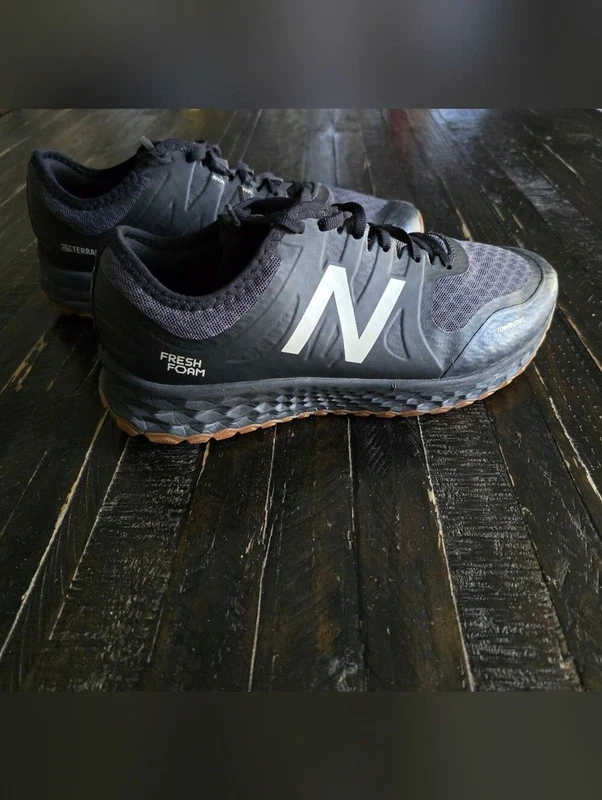
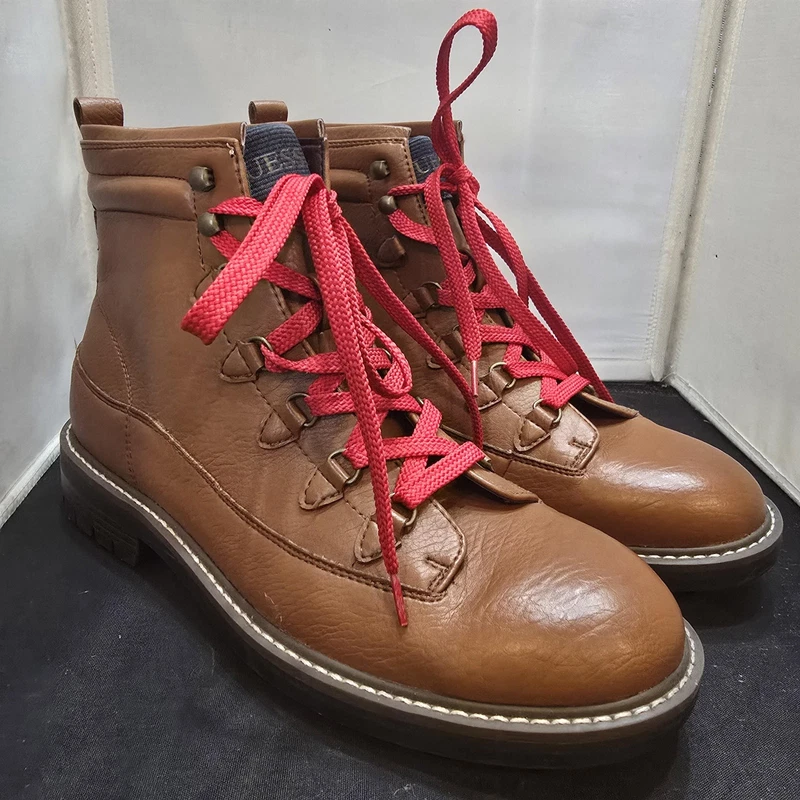
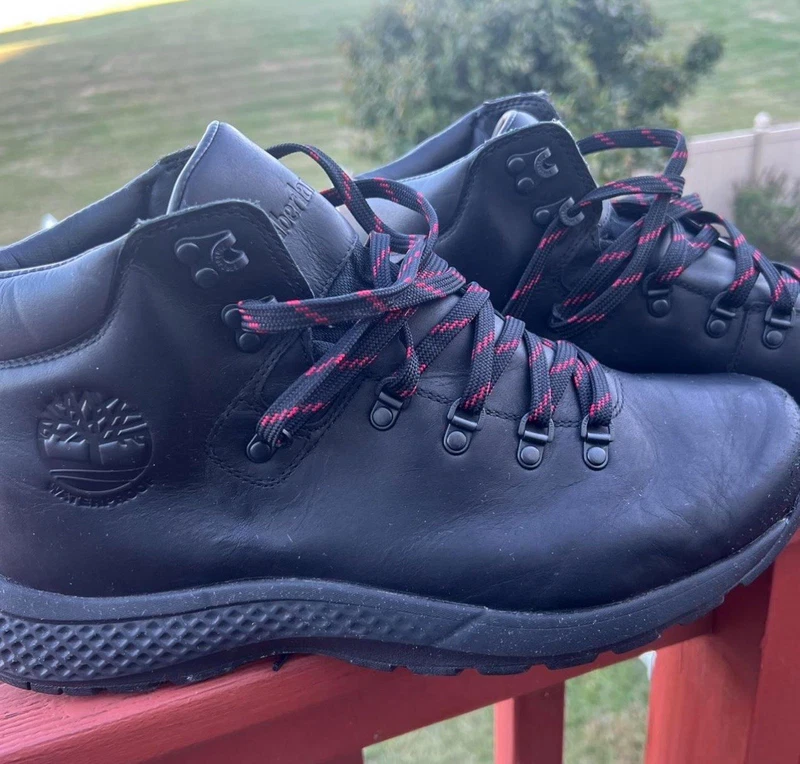
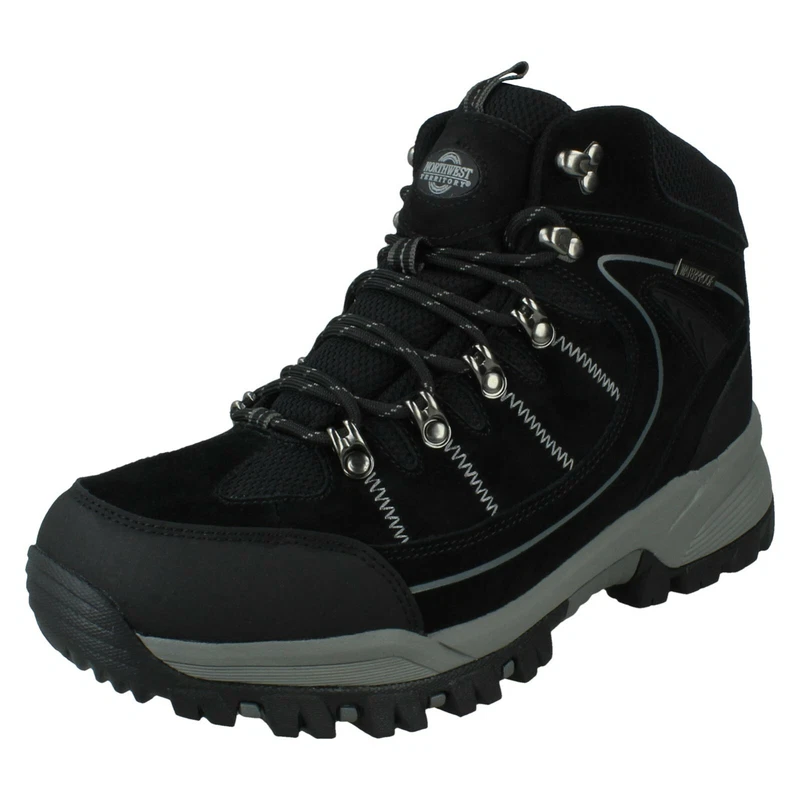
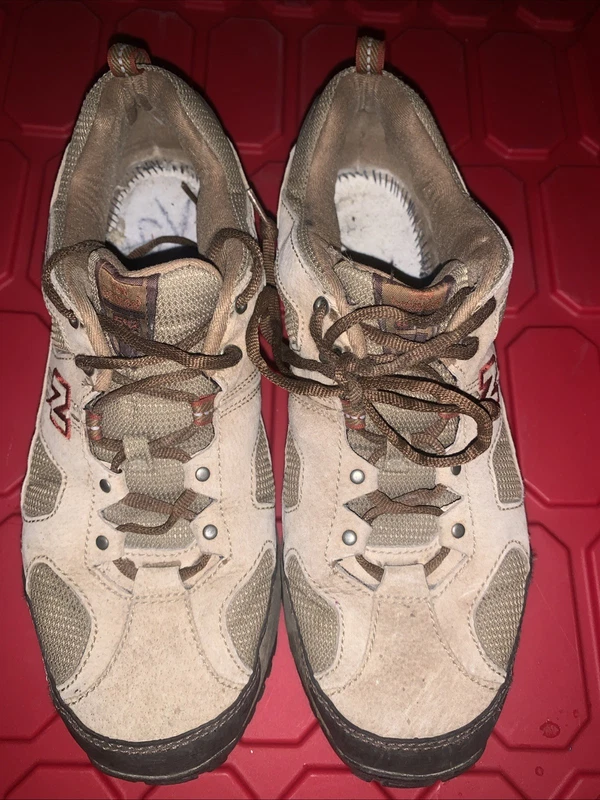
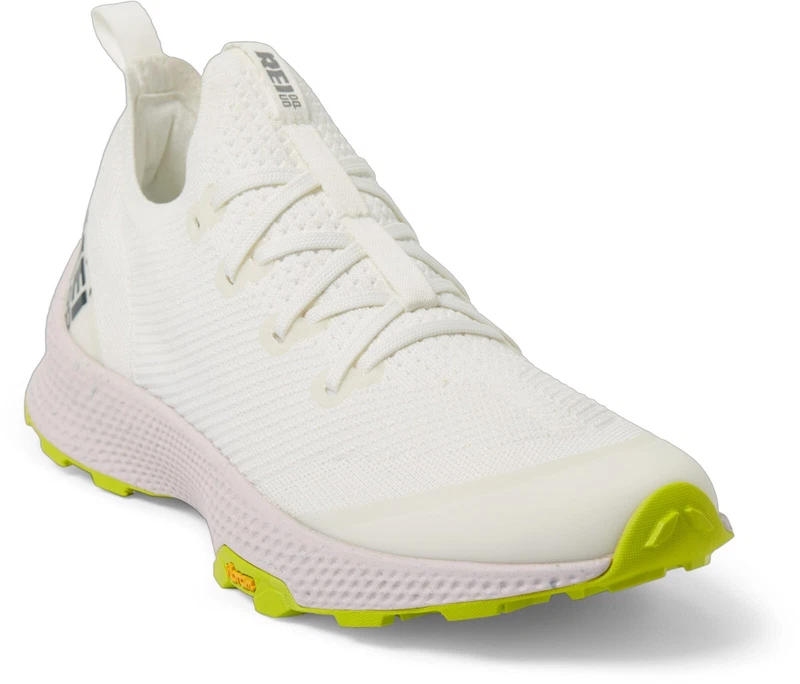
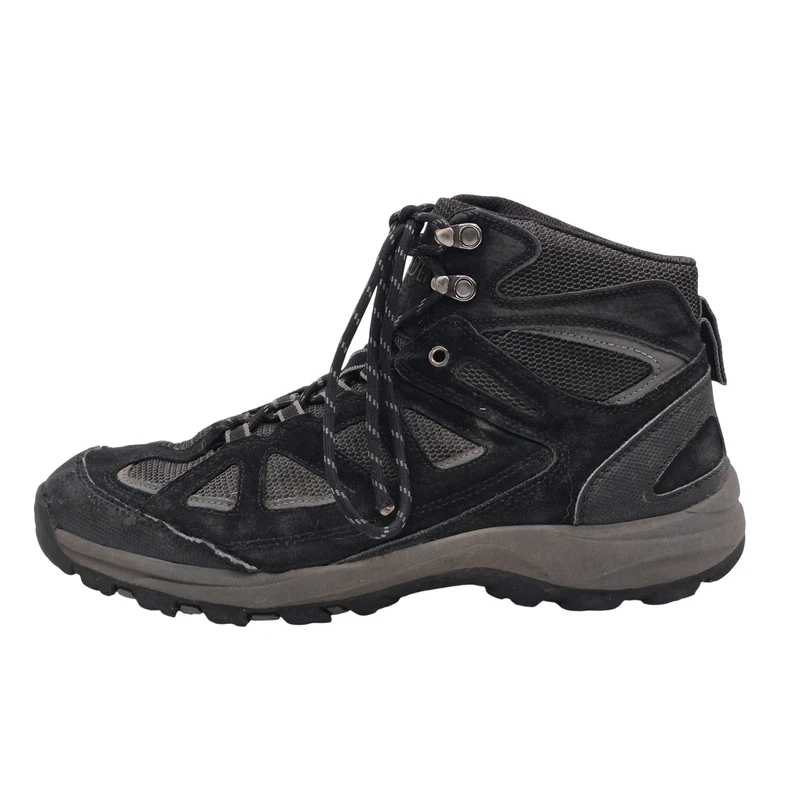
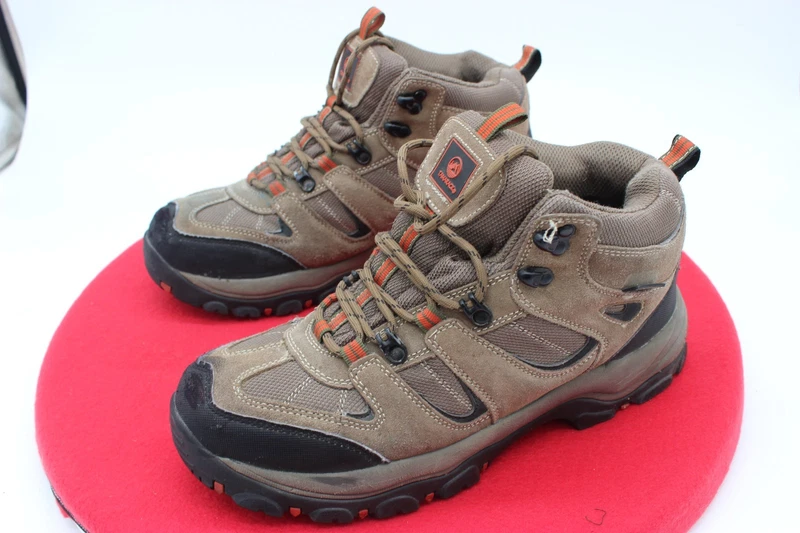
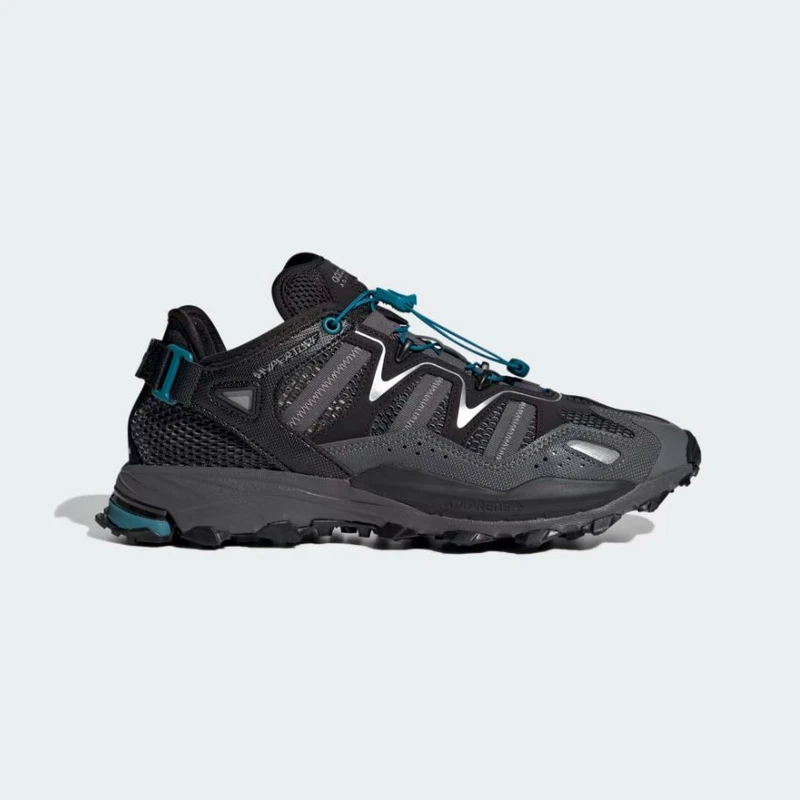
Fit matters more than any other variable, and a technically perfect boot in the wrong size is worse than a decent boot that fits. Because resale footwear is almost never tried on, you need to extract as much information as possible from the listing itself. Four checks, in this order.
One: the size labels
Cross-reference the box label, the interior size print and the outsole sticker against each other in the listing photos. If those three disagree, message the seller before ordering rather than after. Sellers who document all three are rare and worth trusting. The is a good example, stating a men's US 10 and EU 43 per both the interior size print and the outsole sticker, which is a level of care you should actively look for.
Two: the width, and why the big sizes are cheap
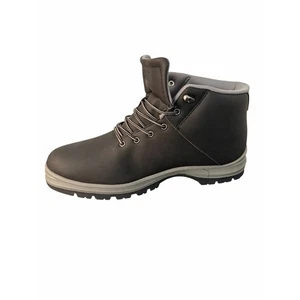
A men's size 13 is not a large size 12, it is a genuinely wider shoe, and that is exactly where the best resale deals tend to sit. The is offered in a men's 13, and the in a men's 15, which the seller describes as hard to find. Both are sizes that are genuinely difficult to source new, and a seller holding one pair with no local buyer will eventually take a lower offer.
Three: toe room and heel lock
You want to be able to wiggle your toes freely at the front, and you want no heel lift at the back. Stand in the boot and raise your heel; if it rises noticeably, the boot is too loose for a descent, and a descent is where loose boots cause blisters and black toenails. Your foot swelling over a long day is not hypothetical, which is why a half size up is the standard recommendation and a full size up is often correct for a boot with a thick midsole.
Four: is it actually a pair?
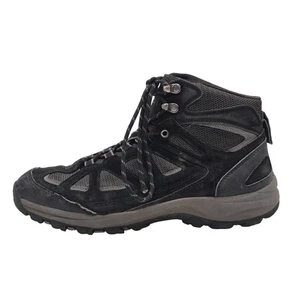
Read the description, not the title. Listings titled as a pair are sometimes one shoe pulled from a size run, and the price reflects that. The is explicit that it is a left shoe only, and that kind of blunt disclosure is precisely what you want to be hunting for rather than discovering three days after delivery.
Five: the variables nobody mentions
Two things routinely ruin an otherwise good pair, and neither is about the boot. The first is socks. A boot fitted in thin cotton socks can be a half size too tight on a cold morning in thick wool, and the difference between those two states is the difference between comfortable and painful over eight hours. If you cannot try a boot on, tell the seller what sock weight you will hike in and ask whether the listing's sizing accounts for it.
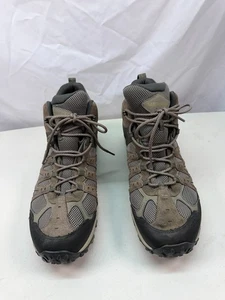
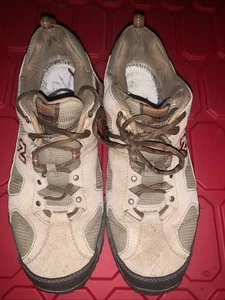
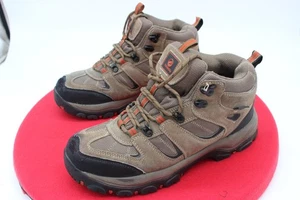
The second is break-in, and it deserves a note because the gap between boots and trail shoes is at its widest here. A leather or suede upper reshapes around your foot over the first several outings, and boots should be worn around the house with thick socks before a long trip. Mesh trail shoes need none of this, which is a real and underrated reason people end up owning more trail runners than boots. The sit in the awkward middle of that trade-off, pairing a suede upper that will soften with a low shaft and a foam insole that needs little adjustment.
Insoles matter more than buyers expect. Most boot footbeds are thin and removable, and swapping in a proper arch insert is often the cheapest performance upgrade available to you, particularly in a wide size like the men's 13 and 15 listings above where the stock footbed rarely fills the volume properly.
Six: how returns actually work on resale footwear
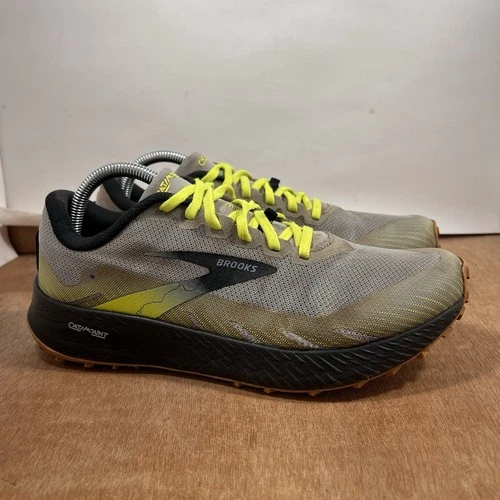
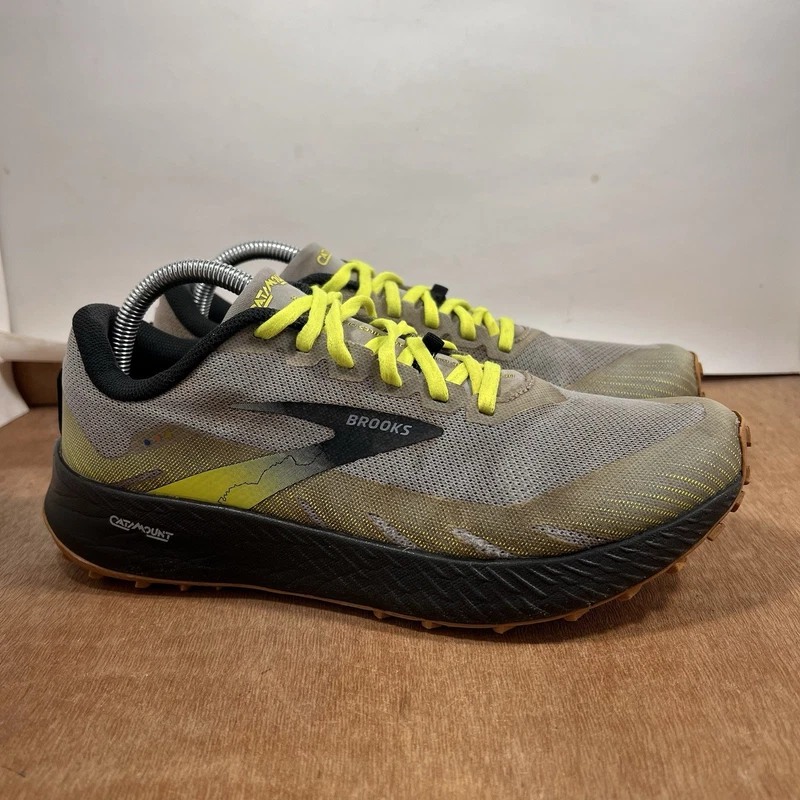
New-with-tags listings typically carry a return window, and that window is the closest thing to a trial fitting you will get. Preowned and used listings usually do not, which is why the condition disclosures in this guide are treated as the equivalent of a warranty. A seller who states the tread is in stellar condition, as with the used Asics in the roundup, has told you something you can rely on. A seller who says nothing about the outsole has told you nothing at all, and the risk is yours.







 $29.75