Knife catalogs describe thirty shapes. In practice a home kitchen uses four, and everything else is a variation on one of them. Buying correctly means knowing which four you need before you look at any steel label.
The gyuto, or Western chef's knife
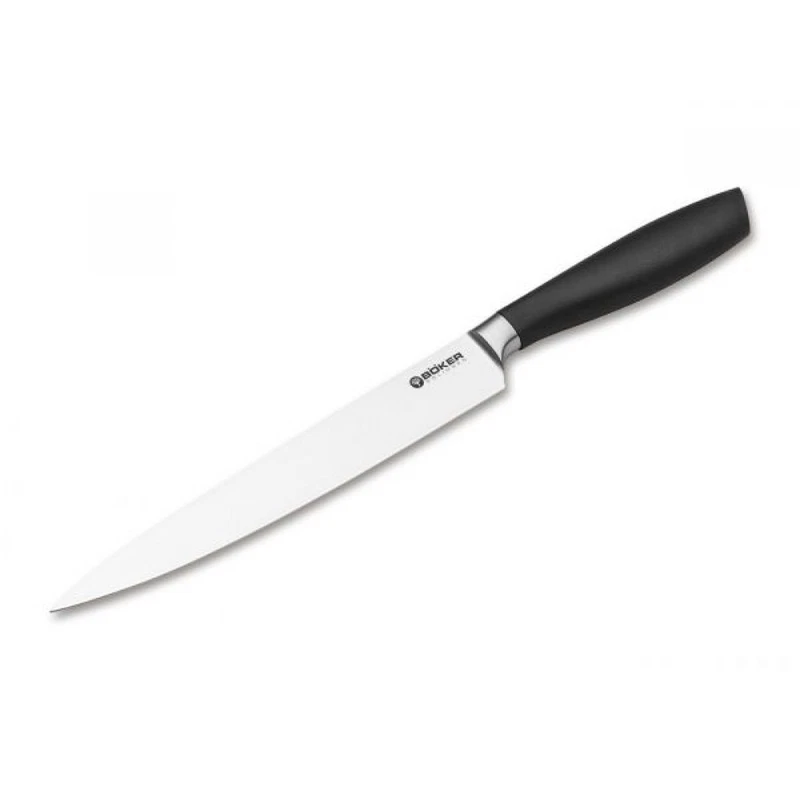
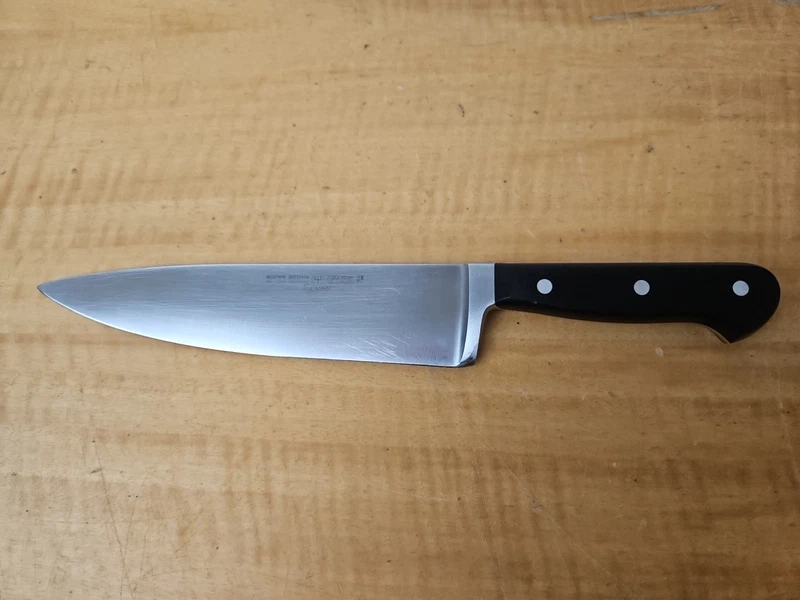
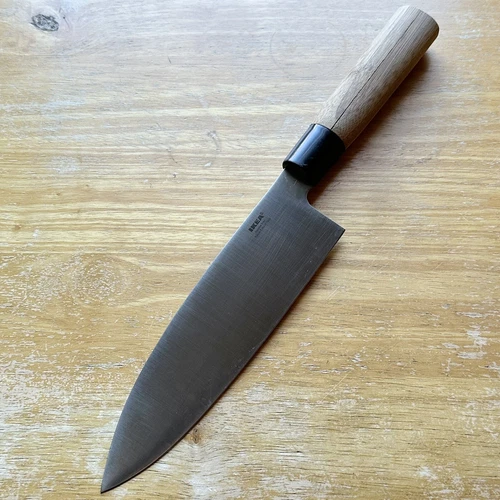
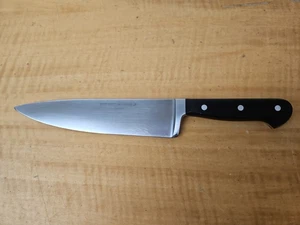
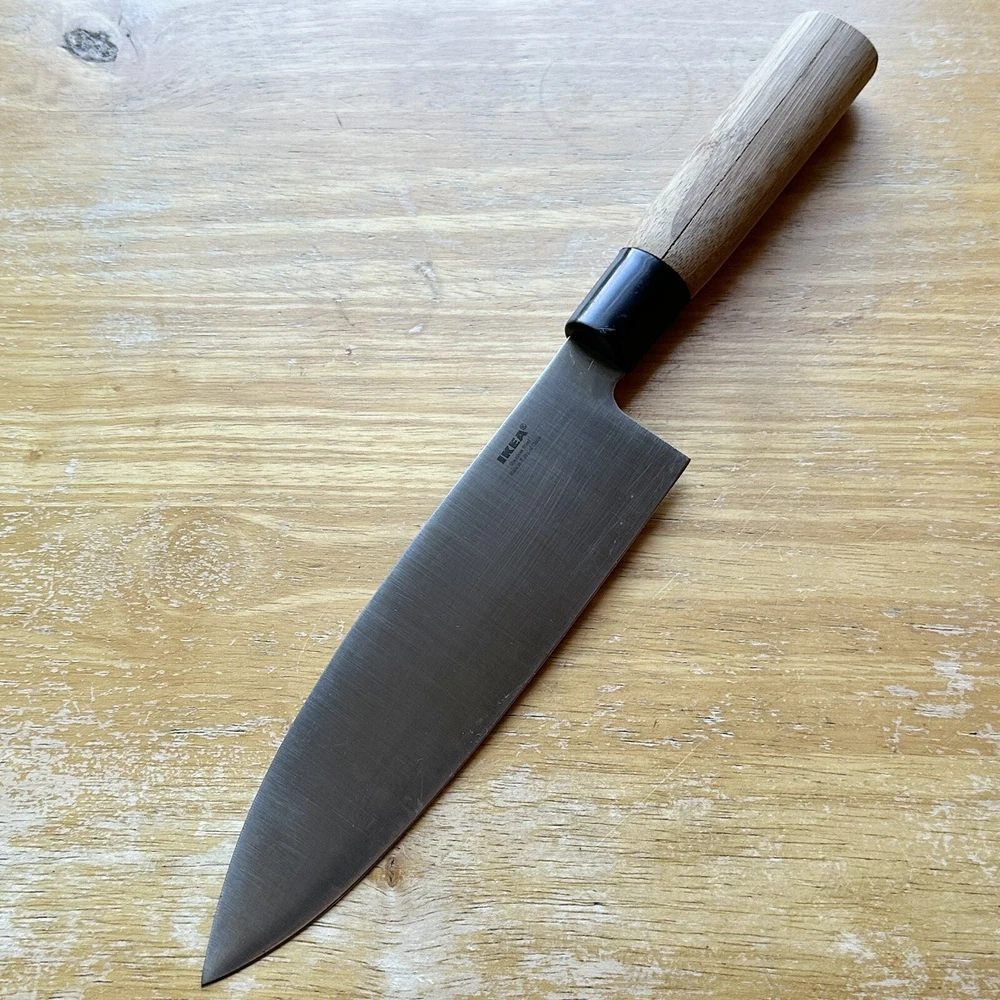
The gyuto is the default Western chef's knife: a 7 to 8 inch blade with a gently curved edge and a small downward hook at the tip for boning. The curve is the whole point. It lets the blade rock through an onion or a pile of herbs while the tip stays planted, which is the fastest way to cut a large volume of food. The at $94.05 is a textbook version of that profile, sold used and described as razor sharp, measuring 12.75 inches overall. If you only ever buy one knife, this is the shape to buy.
The santoku
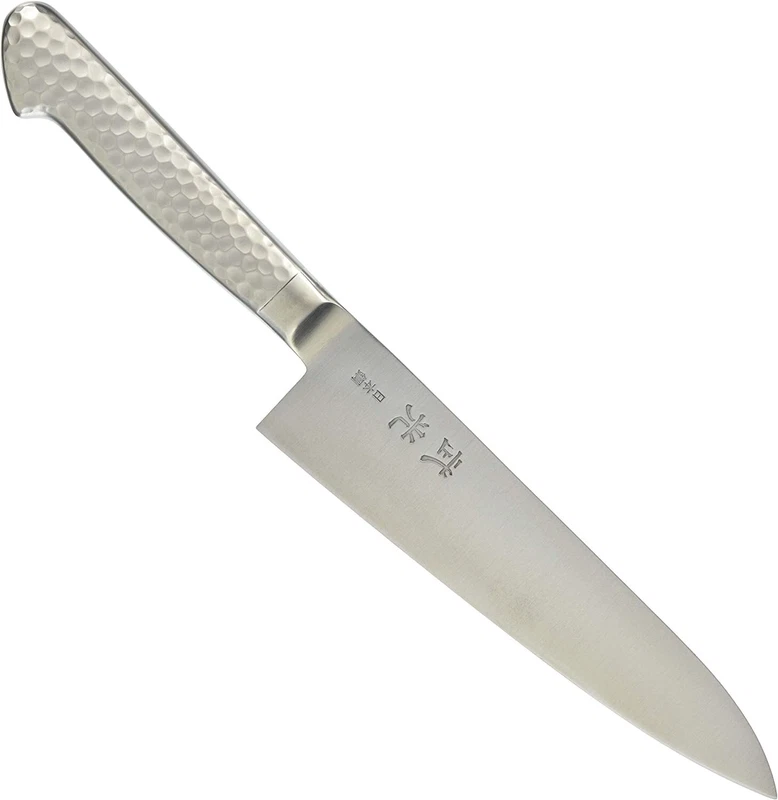
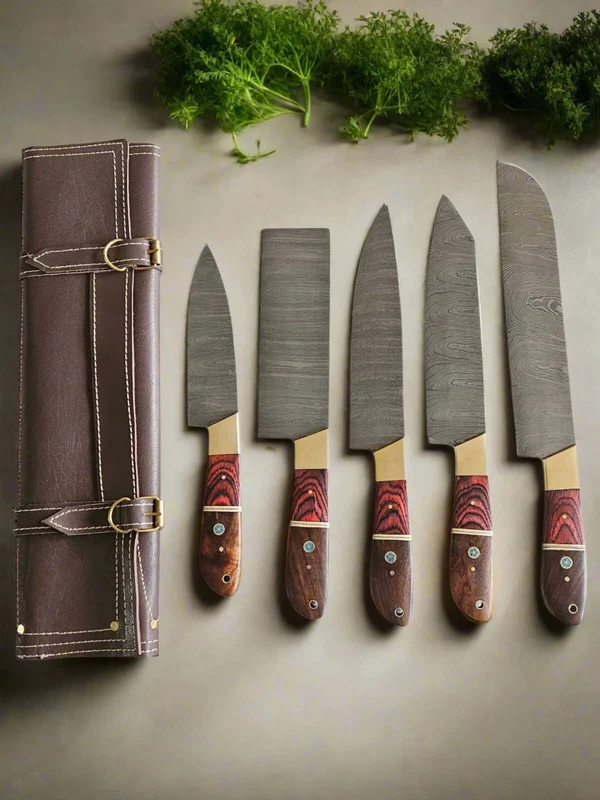
A santoku is the Japanese all-rounder: usually shorter, often around 180mm, with a straight edge and a flatter belly, often with kanji stamped into the blade near the handle. The flat edge is better for straight up and down chopping and for cutting on a board without rocking, and it makes the santoku easier to control for a cook who has not yet learned the rock cut. The at $69.94 is 13 inches overall with an 8 inch blade, and the listing calls it lightweight, which is the correct adjective for a santoku. Where a gyuto is a tool for moving volume, a santoku is a tool for control.
The paring and utility knife
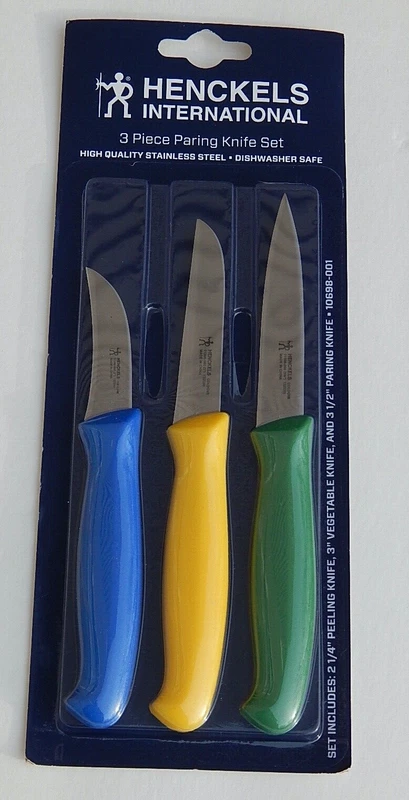
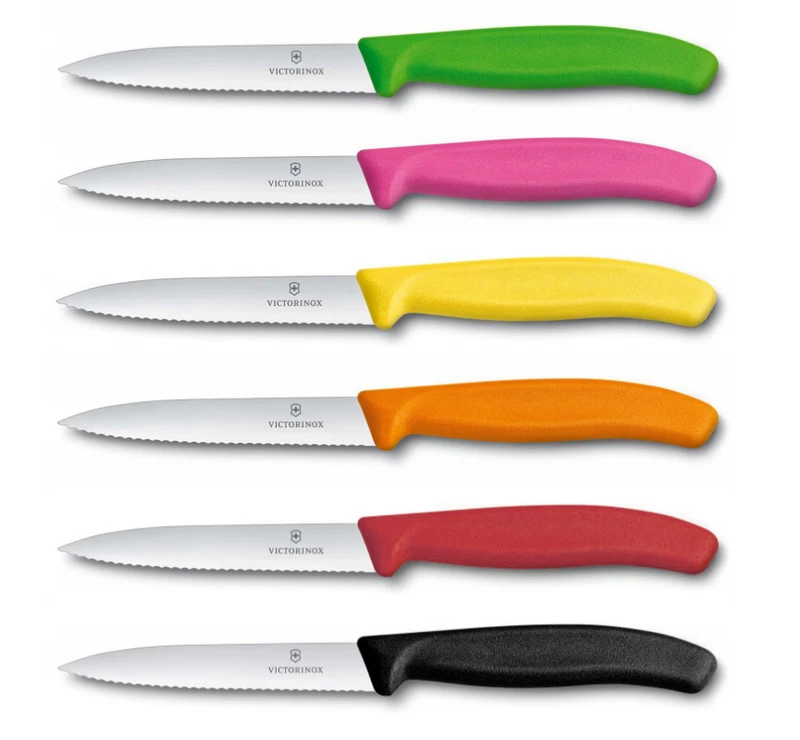
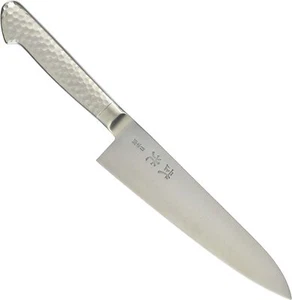
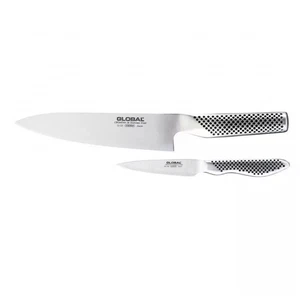
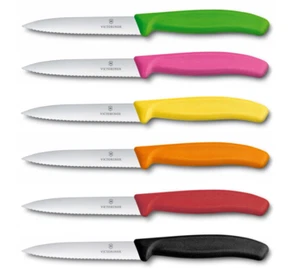
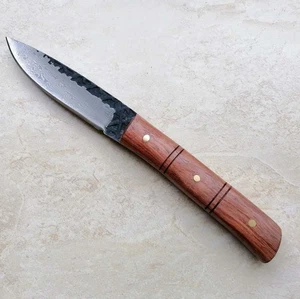
A 3.5 to 4 inch paring knife is the second essential piece, and the one most sets get wrong by making it decorative. It handles the work a big knife cannot: peeling a clove of garlic, trimming a bruised bit off a strawberry, slicing a spring onion lengthwise, coring a pepper. It should be light and short enough to hold in a pinch grip. A good entry point is the at $29.99, described as high quality stainless steel and dishwasher safe.
The cleaver
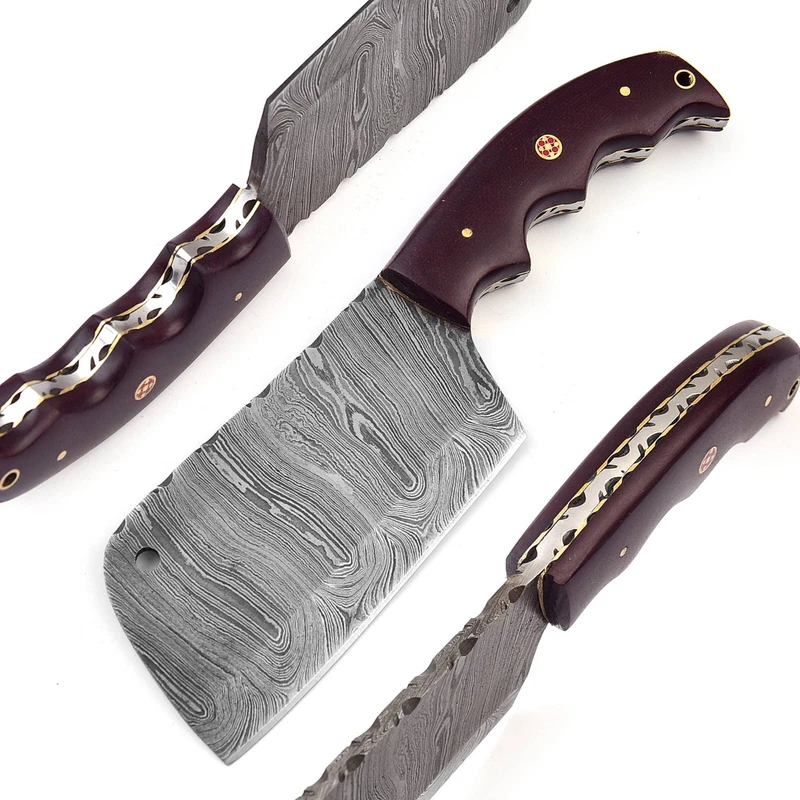
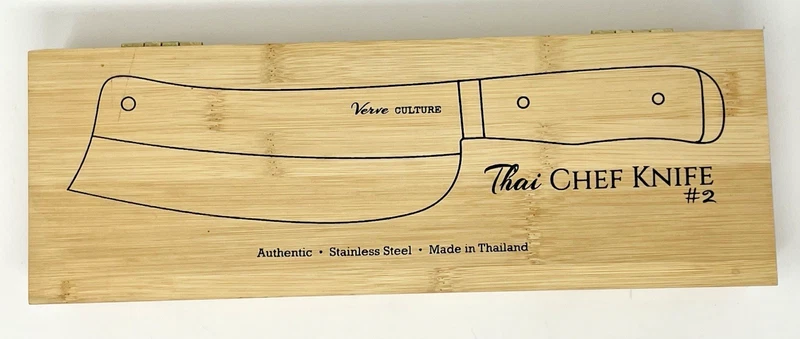
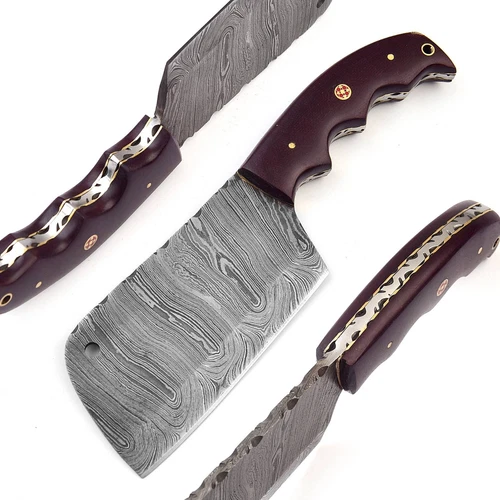
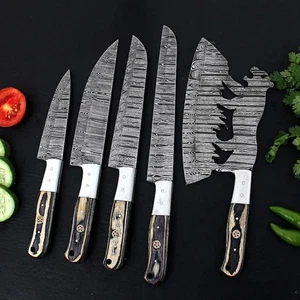
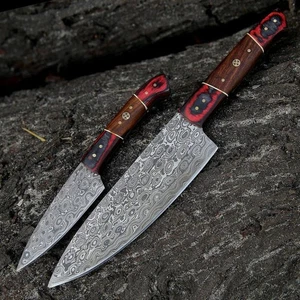
A cleaver is a tall, heavy, rectangular blade. It is not a chef's knife with extra height, it is a different tool that concentrates force on a narrow section of edge and handles bone, hard vegetables and skin. The at $77.51 is sold new as a cleaver rather than as an all-purpose blade. Buy one if you break down whole chickens, prep a lot of squash, or work through bok choy and other dense stems, and skip it otherwise.
Two more shapes earn a mention. A bread knife with a scalloped or serrated edge is genuinely different and should be bought as a separate item, never as the 'slicer' in a block set. A utility knife is simply a 5 to 6 inch compromise between a chef's knife and a paring knife, useful in a small kitchen where counter space is tight. Everything else, including nakiri, usuba, yanagana and boning knives, is a specialist shape that only makes sense once you are cooking a specific thing daily.







 $94.05