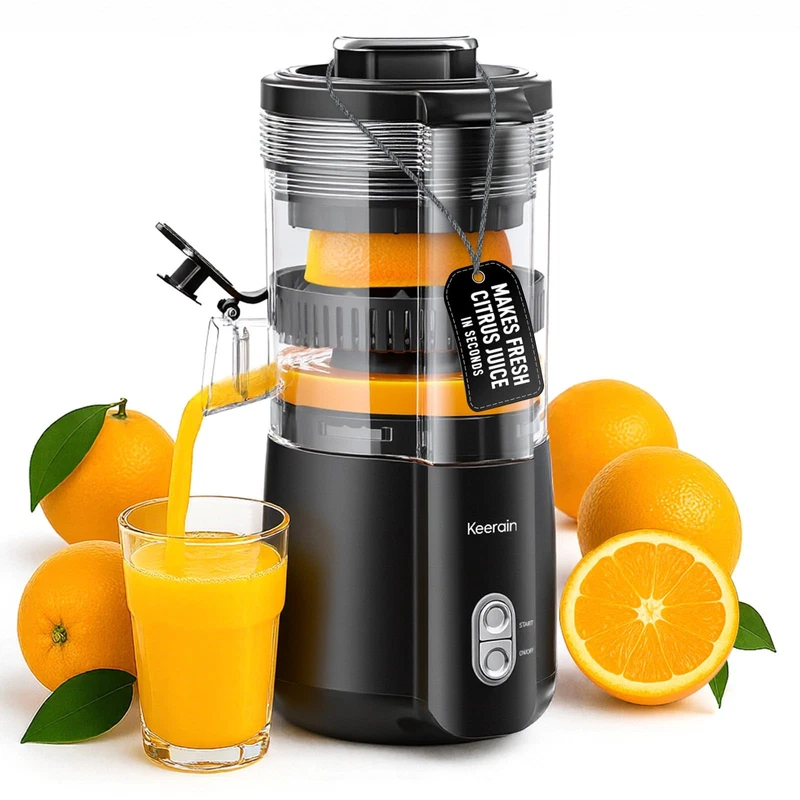
To choose the right appliance, you need to understand how the three major categories of juicers operate. Each style has distinct advantages, specific failure modes, and clear trade-offs regarding speed, yield, oxidation, and cleanup time. Let us examine them one by one so you can determine where your priorities lie.
1. Centrifugal Juicers
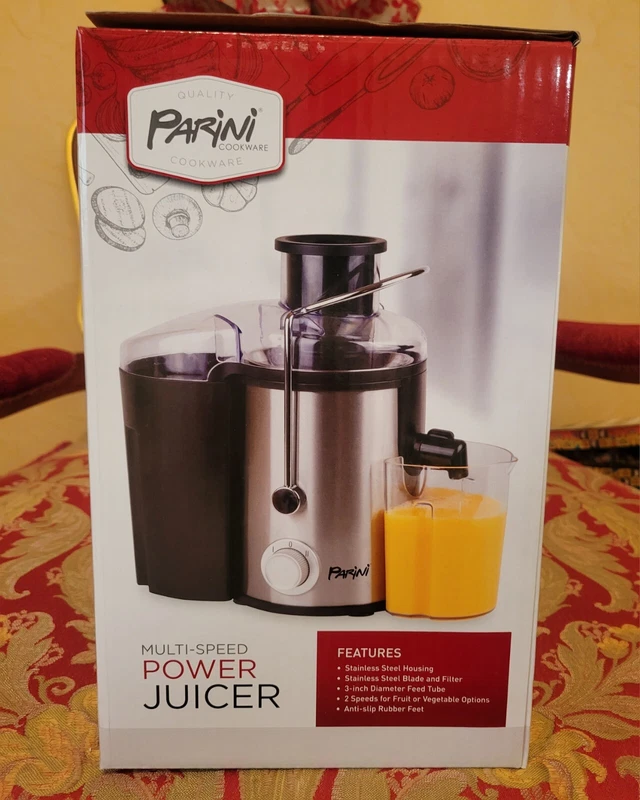
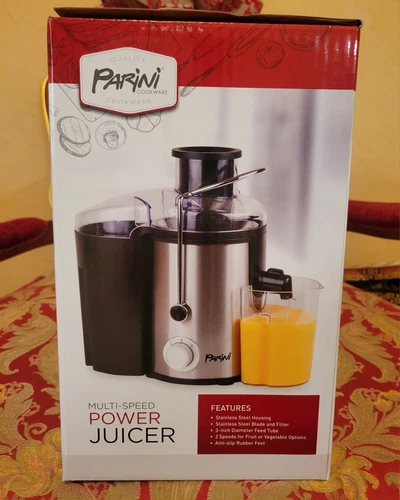
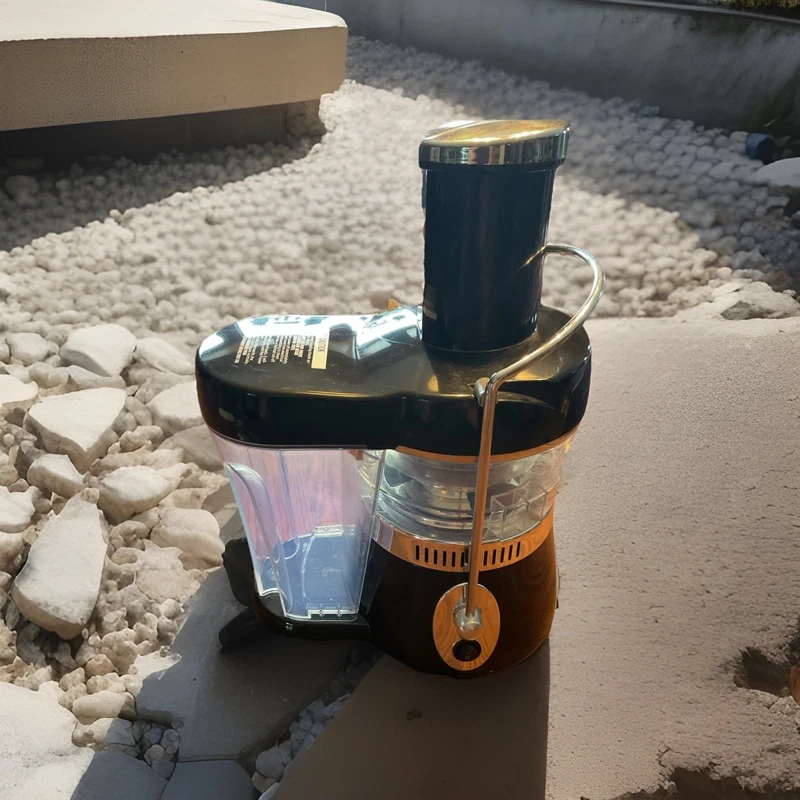
Centrifugal juicers are the speed demons of the countertop world. They feature a flat cutting blade at the bottom of a spinning metal mesh basket that rotates at thousands of RPMs. You drop produce down the feed chute, the blade shreds it instantly, and centrifugal force pushes the juice through the mesh while trapping the dry pulp inside a collection basket. They are fast, loud, and generally the most affordable electric option. If you want a quick glass of apple or carrot juice before running out the door, a centrifugal machine gets the job done in seconds. For instance, the runs on electric power with a single speed setting designed for quick and efficient juicing of citrus, vegetables, and berries. Similarly, the provides multiple speed settings housed in a sleek silver stainless steel finish to handle various textures.
However, centrifugal juicers have notable drawbacks. The high-speed spinning introduces a significant amount of air into the juice, causing rapid oxidation and separation. If you do not drink the juice immediately, it discolors and loses its fresh flavor profile. Furthermore, they struggle mightily with leafy greens; if you try to juice plain spinach or kale in a centrifugal juicer, you will mostly end up with a dry chamber and disappointed sighs. Cleaning the microscopic holes in the stainless steel mesh basket can also be a tedious chore that requires a specialized scrub brush.
2. Slow Masticating (Cold-Press) Juicers
Masticating juicers operate on an entirely different principle. Instead of shredding produce at high velocity, they use a heavy-duty auger (screw-like gear) that slowly crushes, grinds, and presses fruits and vegetables against a tight stainless steel screen at low RPMs (typically between 40 and 80 RPM). This gentle crushing action minimizes heat generation and oxidation, resulting in vibrant, nutrient-dense juice that can be stored in an airtight jar in the refrigerator for up to 72 hours without losing its structural integrity or flavor.
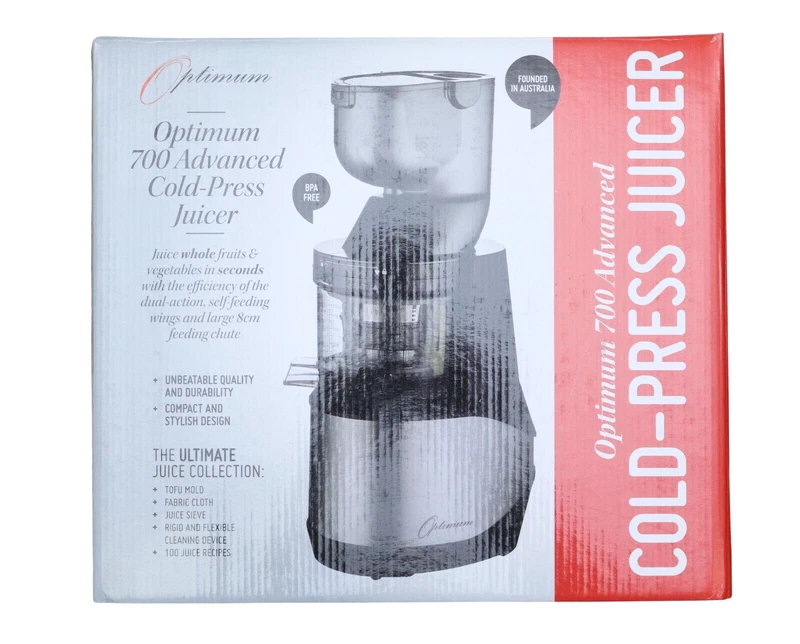
Slow juicers excel at extracting every last drop of liquid from leafy greens, wheatgrass, fibrous celery, and hard roots. They are also remarkably quiet compared to the roaring whine of a centrifugal model. The primary trade-offs are financial cost, physical weight, and preparation time. Because the feed chutes on traditional slow juicers can be narrow, you often have to chop your produce into smaller pieces before feeding it into the machine. Fortunately, modern engineering has addressed this bottleneck; models like the feature an exceptionally wide 5.3-inch feeding chute that lets you drop whole fruits and vegetables directly into the chamber. Another high-end option is the , which delivers advanced power at 200W to juice whole fruits and vegetables in seconds. For compact spaces or versatile vegetable extraction, the utilizes powerful masticating capabilities to process citrus, berries, and hard vegetables smoothly.
3. Citrus Juicers and Manual Presses
If you are strictly focused on citrus fruits, motorized or manual citrus juicers are unrivaled. They bypass the complicated gears and mesh baskets of multi-purpose juicers entirely. You simply cut an orange, lemon, or lime in half, press it down onto a spinning ribbed reamer or squeeze it inside a lever-actuated press. This extracts the juice while keeping the bitter oils of the skin and unwanted seeds out of your glass.
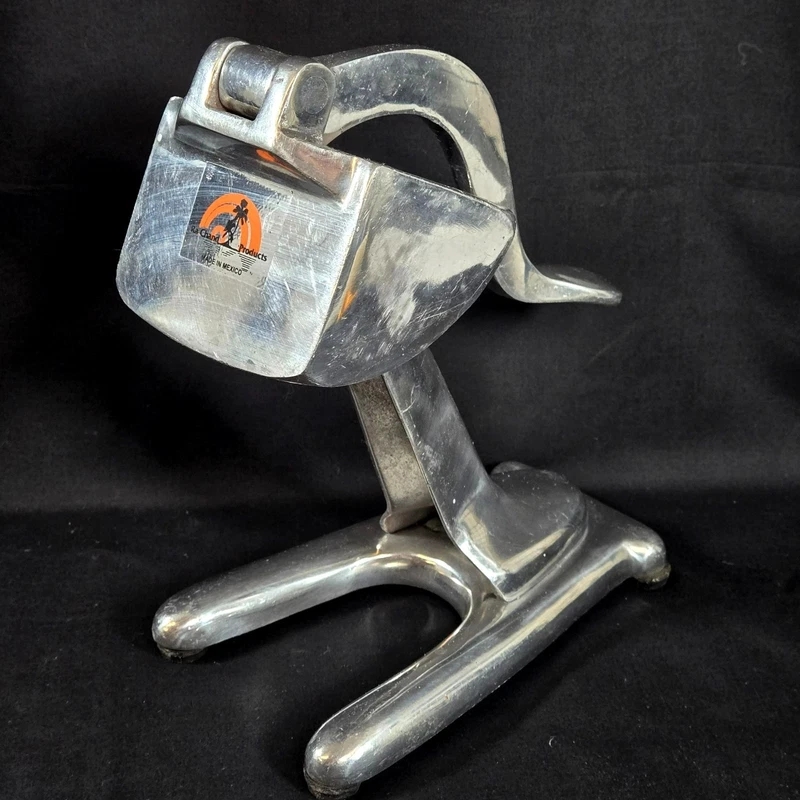
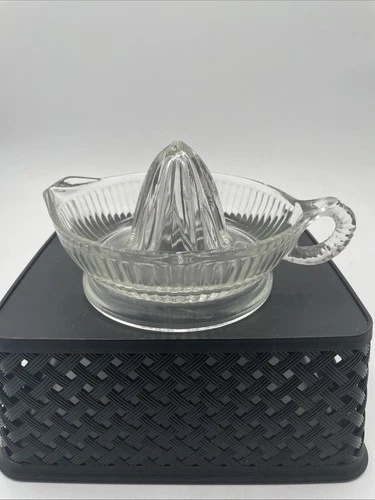
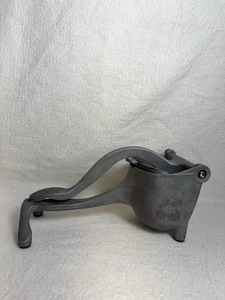
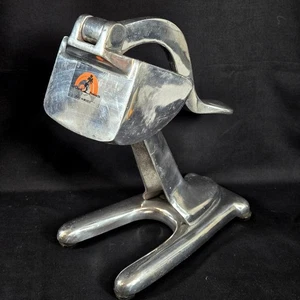
Manual and vintage options offer timeless durability and zero electrical footprint. For instance, the represents classic American craftsmanship built from rugged aluminum that stands the test of time. If you prefer a heavy-duty commercial style lever press, the is constructed from solid cast aluminum with a polished finish to deliver reliable, high-yield juice extraction for lemons, limes, and oranges. For simple household tasks, the features a handy spout and handle for traditional tabletop juicing, while the provides that classic textured reamer profile.
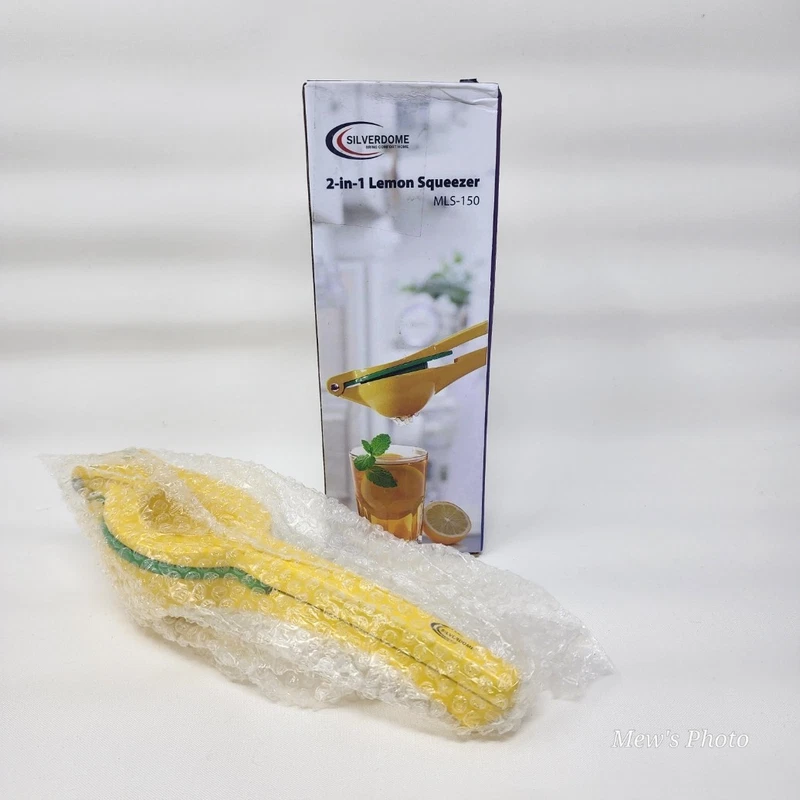
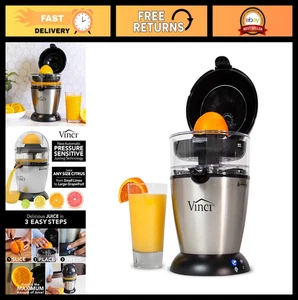
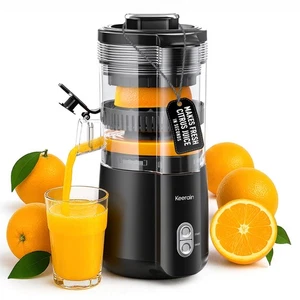
If you prefer handheld mechanical squeezing without straining your wrists, simple lever tools like the and the are designed to get every last drop of liquid from your citrus fruits with minimal effort. For motorized convenience on citrus without manual twisting, automated countertop units like the and the offer quiet operation, one-touch automation, and hands-free juice extraction. If you need something compact or travel-friendly, portable options like the and the allow you to enjoy fresh citrus juice anywhere without being tethered to a wall outlet. For larger-scale home juicing or vintage enthusiasts, units like the , the , and the offer unique historic pedigree and specialized countertop performance.















 $35.0