





 $9.47
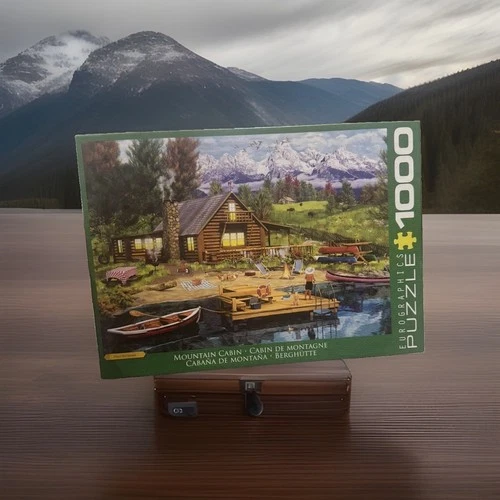
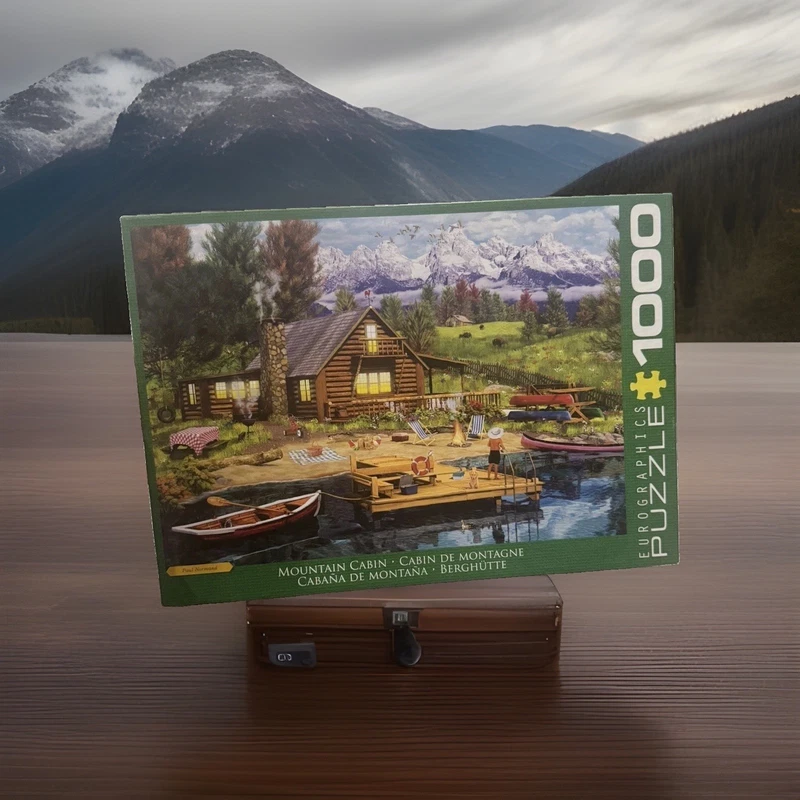
Eurographics mountain cabin 1000-piece puzzle
eBay Eurographics Mountain Cabin 1000-Piece Interlocking Cardboard Jigsaw Puzzle
See the live listing →A 1000-piece puzzle is about four hours of calm. Here is how piece count, difficulty, subject matter and board thickness actually affect whether you finish one.

Jigsaw puzzles occupy an unusual position in the hobby world. They are a completely solved problem mechanically — the pieces either fit or they do not — and yet they remain one of the few activities people return to for years. What makes them satisfying is not difficulty but order: a tray of mixed pieces that gradually resolves into an image.
That also means picking a bad one is genuinely frustrating in a way picking a bad recipe is not. This guide works through the four variables that decide whether a puzzle gets finished or abandoned halfway through, and what each one is worth. Prices were confirmed on eBay in October 2026.
These finish in well under an hour. Useful for children, for a lunchtime break, or as a warm-up before starting something larger. They are also the category where the image matters most relative to the assembly, because there is barely any process.
An afternoon or two. This is a very common size for a first attempt because it is long enough to feel like a project and short enough to finish before losing interest.
Four to six hours, usually over three or four sessions. This is the size the majority of the market is built around, and it is the right default for an adult who wants something satisfying rather than a challenge.
A is a clean example of the format, and the artwork is the kind that rewards sorting by colour and shape rather than by scene.
Longer than one evening and worth committing to. Worth picking deliberately rather than accidentally, because a puzzle you have to drag out of a cupboard for three weeks is a different experience from one you look forward to finishing.
Piece count scales difficulty roughly linearly on its own, but the other variables move it much further. A 1000-piece puzzle with lots of repeated sky and lots of identical dark green foliage is genuinely harder than a 1500-piece puzzle with a highly varied image. Difficulty is a function of the artwork as much as the count.
$9.47eBay Eurographics Mountain Cabin 1000-Piece Interlocking Cardboard Jigsaw Puzzle
See the live listing →This is the single specification that changes the experience most, and almost nobody knows to look for it.
Every piece is cut with its own individual shape. The physical outline of a piece tells you where it belongs before you look at the image. This makes assembly dramatically more forgiving, because you can feel a fit.
A is a best-fit style puzzle, and it is the category to recommend to anyone starting out.
Pieces are cut in the conventional way, so several different pieces share the same shape. Nothing but the image guides you. This is the traditional format and the one experienced puzzlers usually prefer, because it produces the sorting-and-searching behaviour that the activity is actually about.
A cheap shortcut where all pieces are the same shape. Fine for very young children and quite uninteresting for anyone else.
 $20.0
eBay The product is a set of two 1000 piece jigsaw puzzles featuring artwork by Frida Kahlo, part of the "Frida's Garden" collection by The Unemployed Philosopher's Guide & Frida (missing pieces) The puzzles come in a colorful multi-color design made
See the live listing →Most brands rate difficulty out of five, usually calculated from piece count, the complexity of the shapes used, how much the image repeats colours, and how similar neighbouring pieces look.
The useful rule when choosing for someone else:
Two hidden difficulties worth knowing. A puzzle with a very dark overall image is harder than it looks, because you are sorting by shape in poor contrast. A puzzle with a very busy, highly repetitive pattern — a crowd, a starfield, a floral wallpaper — is the hardest category of all, because there is no distinct colour or shape to key on.
The visible picture is not the only thing that determines how a puzzle feels to handle, and this is where cheap and expensive puzzles diverge most visibly.
Thin card puzzles flex and are hard to handle. Standard puzzle board is around 1mm and is adequate. Thicker board feels substantial, holds a cut edge cleanly and survives being picked up repeatedly without bowing — which is the difference between a puzzle that stays on the table for a month and one that gets put away in a box.
A matte finish reduces glare under bright light, which matters if you are working near a window. A gloss finish makes colours slightly punchier but introduces reflections. Neither is wrong; matte is easier to work with in most rooms.
A low-resolution print looks muddy at 1000 pieces, where each piece is small enough that printing artefacts become visible. A is the kind of licensed artwork that tends to be printed well, because licensed art is usually licensed at print quality rather than downsampled from a web image.
Anything with shaped pieces — a silhouette outline, irregular edges, a die-cut border — is visually striking but very hard. Pieces of a standard shape alongside shaped ones are much easier, because the majority still sort normally.
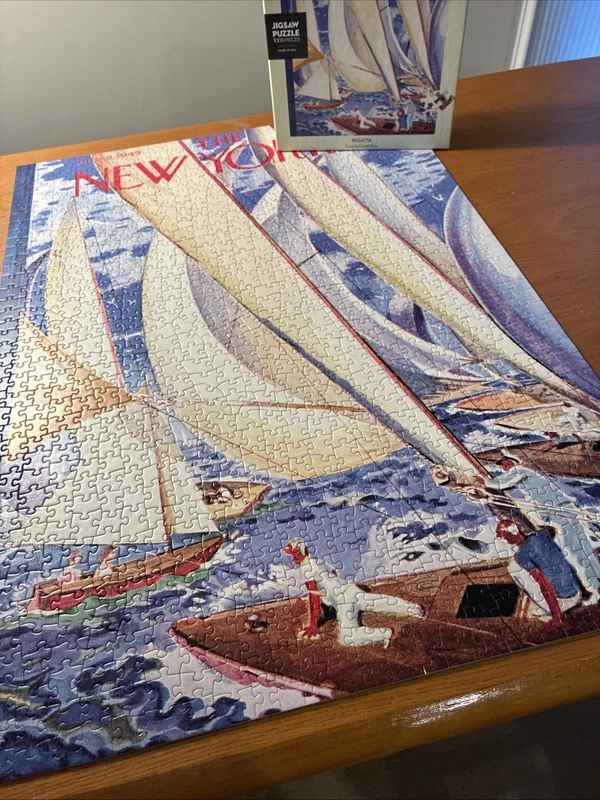 $10.0
eBay From The NY Puzzle Company, this 1000 piece features lots of sailboats. Called “Regatta,” it is complete and carefully repackaged. The cover of The New Yorker 7/9/1949 will be sent quickly.
See the live listing →Theme does two jobs: it sets the difficulty and it determines whether you will actually enjoy the image. A better-known subject is usually easier because you can use what you know about the scene to place pieces.
Landscapes and countryside are the easiest and the most common. The and the are both examples of the type — lots of distinct colours, clear shapes, obvious orientation.
Art and paintings work well at around 1000. A is the kind of subject with strong colour blocks that make sorting easy and satisfying.
Bright cartoon and novelty art is easier still, and often the most accessible for children and for family puzzling. A is typical.
Astronomy and space is a trap. Starfields are extremely repetitive, which makes it one of the hardest subjects at any piece count despite looking simple. The is worth approaching knowing that.
Abstract or highly patterned art is the hardest category of all, because there is nothing to anchor on.
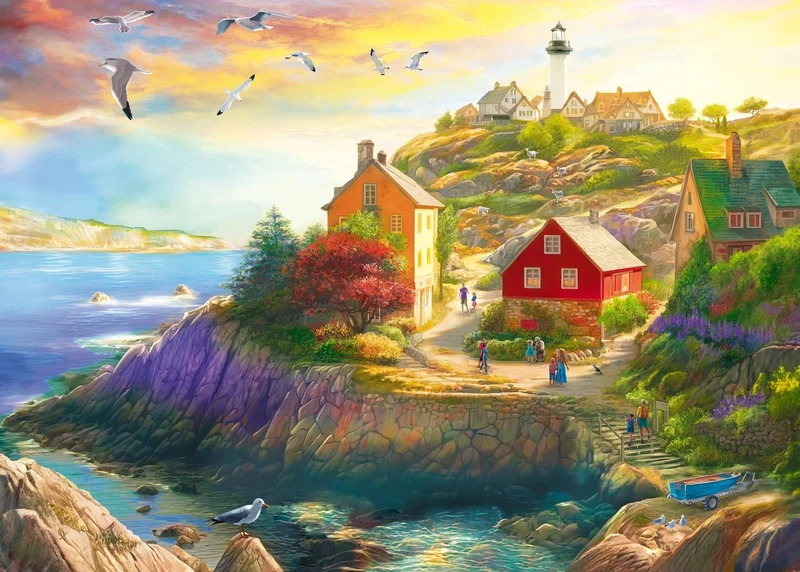 $16.44
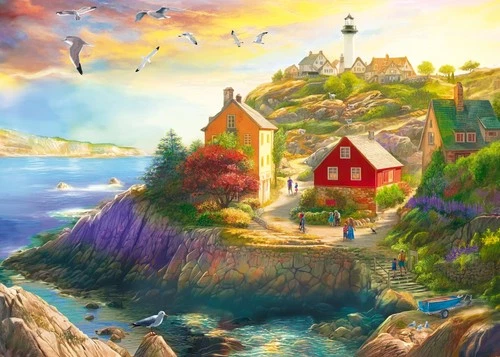
eBay Goat Hill Lighthouse 1000 Piece Jigsaw Puzzle for Adults | Unique, Perfectly-... UNIQUE JIGSAW PUZZLE: Experience the joy of solving the Goat Hill Lighthouse 1000 piece puzzle - a delightful oceanside scene featuring a lighthouse, with each piece uniquely
See the live listing → $10.98
eBay The Mount Rushmore 1000 Piece Jigsaw Puzzle by Golden features a colorful multi-color design depicting the iconic landscape of Mount Rushmore. Made of sturdy cardboard pieces, this vintage puzzle is perfect for puzzle enthusiasts aged 12 and up. With inte
See the live listing →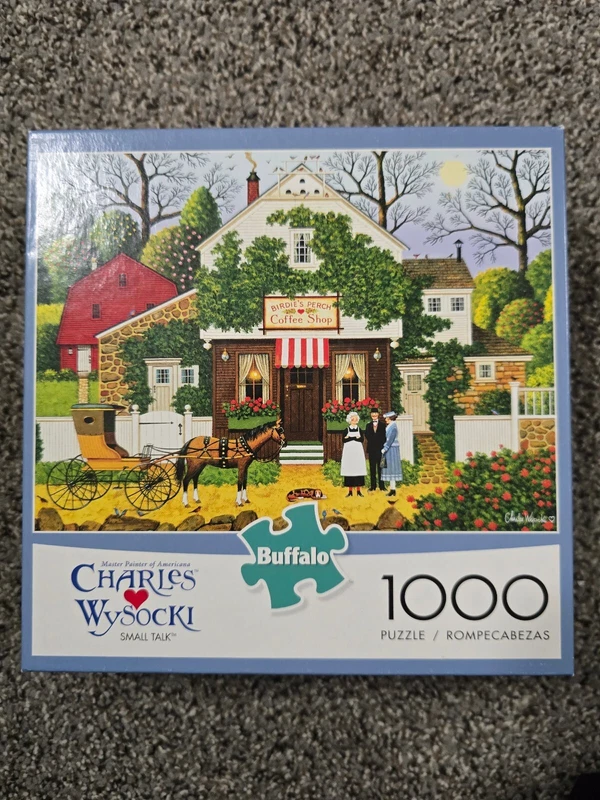 $19.41
eBay This Charles Wysocki Small Talk puzzle by Buffalo Games features a charming 1000-piece jigsaw puzzle depicting a quaint coffee shop scene. The puzzle offers a fun and engaging challenge for puzzle enthusiasts and makes a great gift or pastime activity. Th
See the live listing → $16.41
eBay Fast Shipping On All Items 30 Days Money Guarantee Customer Support Excellent Service 100% Satisfaction Satisfaction Guaranteed Chicken Puzzles for Adults 1000 Pieces Happy Chicken Jigsaw Puzzle 1000 Pieces, Funny Rooster Hard Specification Size 23.9 x 23
See the live listing →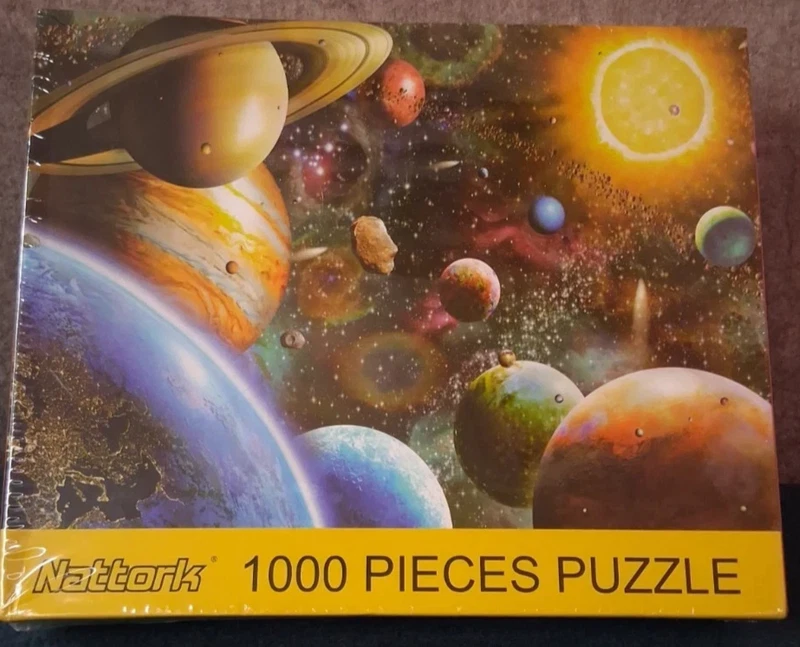 $7.64
eBay The Solar System 1000 Piece Jigsaw Puzzle by Nattork features a colorful and detailed space travel theme, perfect for adults and older children aged 8 and above. Made of durable cardboard material, this puzzle showcases the intricate solar system with a 2
See the live listing →The artwork does more work than the difficulty rating in determining whether a puzzle gets finished, so it is worth choosing for the person rather than for the rating.
 $10.0
eBay 1000 Piece Circular Landscape Jigsaw Puzzle, Multicolor, Family Game
See the live listing →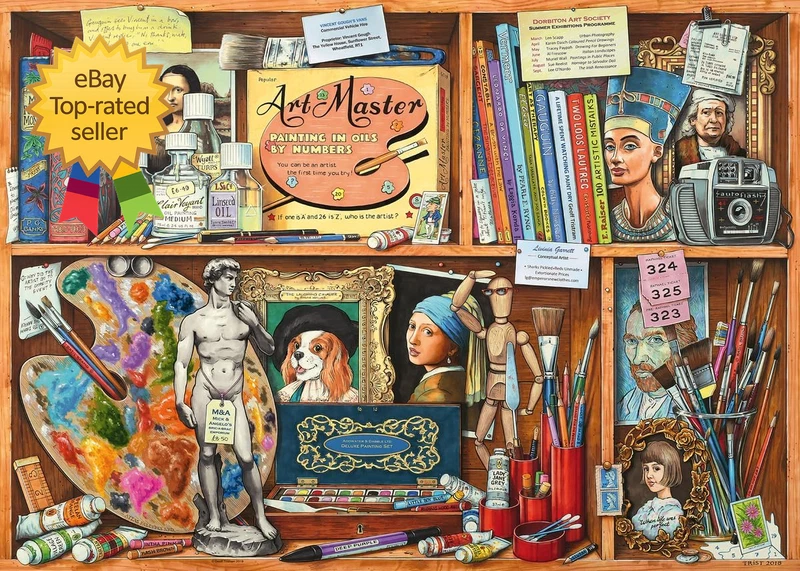 $14.86
eBay Store New Arrivals Add to Favorite View Feedback Contact Artist's Cabinet 1000 Piece Jigsaw Puzzle for Adults Unique Perfectly Fitting Pieces Description Product Dimensions 13.09 x 10.04 x 0.1 inches Item Weight 1.63 pounds Release date October 1, 2024 UN
See the live listing →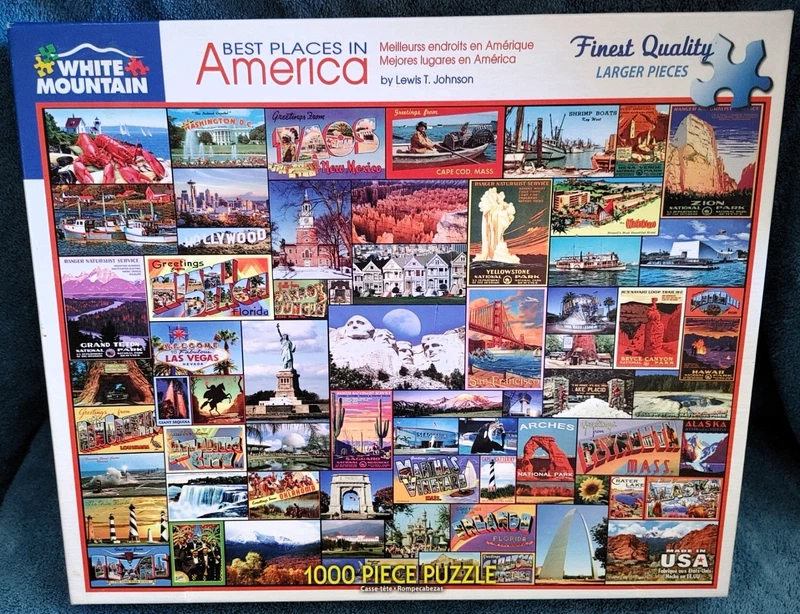 $9.4
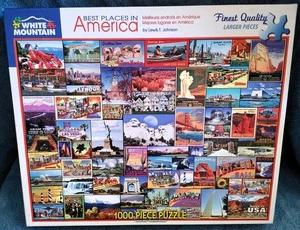
eBay The White Mountain Puzzle: Best Places In America 1000 Piece Jigsaw Puzzle is a colorful and engaging puzzle featuring the theme of "Best Places in America." Made of durable cardboard materials, this puzzle is designed for ages 17 and up. With 1000 pieces
See the live listing → $12.99
eBay The Boardwalk Puzzle Company Jigsaw Puzzle featuring Paris has 1000 pieces and is made of cardboard. The puzzle showcases a colorful multi-color design with an architecture theme, perfect for puzzle enthusiasts aged 12 and up. With a complete set, this ji
See the live listing → $11.0
 $22.0
eBay 1000 Piece Rainbow Tornado Jigsaw Puzzle for Adults - Challenging Art Game 🧩Unwind with Our 1000 Piece Puzzles for Adults:Dive into the mesmerizing world of our Rainbow Tornado jigsaw puzzle! Perfect for adults aged 14 and up, this engaging activity helps
See the live listing → $12.45
eBay 300 Pieces Jigsaw Puzzles for Adults, Cat Puzzle for Adults Children Seniors, Animal Puzzle 300 Pieces, Gift for Birthday, Home Decor, Fun for Family Entertainment(20.5 * 15 in) FREE AND FAST SHIPPING! Cat Jigsaw Puzzles: This puzzle features a humorous s
See the live listing →Four habits separate a finished puzzle from an abandoned one.
Do not throw the box away. The box is genuinely the easiest storage solution — flat, dust-free and it keeps the puzzle identifiable — and it is why keeping the packaging is a normal thing to do in this hobby.
To frame a finished puzzle, lay it face down on a protected surface, apply a thin and even layer of craft glue across the back, and leave it flat under weight for a day or two. Then trim the edges with a craft knife and use acid-free tape or a frame mount rather than masking tape, which yellows.
Rolling a puzzle is faster but leaves a curl that makes framing awkward. If you have no space to keep it flat, rolling is a reasonable compromise provided you weight it while it is still wet.
If you are building a family shelf rather than a single puzzle, the tabletop categories our board game guide and our guide to construction sets for adults cover the two other formats that dominate the same shelf space. A puzzle, a board game and a build set use the same evening in different ways, and having all three is a common and reasonable position.
For most people: a best-fit 1000-piece puzzle with a landscape or familiar-object subject, on standard board. That is the reliable combination — four to six hours, a clear image to work towards, and a physical sort that makes progress visible.
Change one variable at a time once you are past the first few. Go to 1500 pieces for length, to a random-cut 1000 for difficulty, or to an abstract subject for a genuine challenge. Change all three at once and the puzzle gets put away.
Two pieces of advice that cost nothing. Always check a rating from someone who has actually finished it, because the difficulty rating on the box is a brand-wide average rather than a promise. And buy one you like the look of rather than one that is merely easy — you are committing several hours, and a picture you find dull is the most reliable way to abandon a puzzle.
eBay prices move daily and stock varies, so check recent sold listings before committing rather than trusting the first price you see.
Roughly four to six hours for most people on a first attempt, and considerably less if you are methodical about sorting. The number that matters more is sessions rather than hours — a good 1000-piece puzzle is typically finished over three or four evenings. Puzzles that look enormous in the box are usually finished faster than expected because the sorting stage does most of the work for you.
It is calculated from piece count, piece shape complexity, how much the colours repeat, and how hard it is to find matching edges. A 1000-piece puzzle with a highly repetitive pattern — lots of the same colour — can be considerably harder than a 1000-piece puzzle with a varied image. Trust the difficulty rating over the piece count when choosing something for a particular person.
Best-fit, where every piece has its own individual shape, is dramatically easier to assemble because the physical shape tells you where it goes. Random-cut puzzles with several identical shapes rely entirely on the image. For a first puzzle, a best-fit 1000 is the right call. For a second one, try a random-cut version — many people find them more satisfying once they already know the workflow.
Glue sheets or a thin layer of glue, then leave it flat under something heavy until dry. Rolling it is an alternative but it puts a permanent curl through the board that makes framing difficult. If you intend to frame it, glue it from the back, leave it under weight for a day or two, and use acid-free tape on the edges rather than masking tape, which yellows over time.