Binoculars sit in an awkward middle for this hobby, and it is worth being precise about why, because they are the one optical item that is worth owning for meteor watching.
The problem with binoculars for counting meteors is field of view. A typical 12x50 gives you about 5 degrees of sky — a patch roughly the size of a tennis ball held at arm's length. Meteors arrive over the whole sky. So binoculars make faint meteors harder to spot (you are dimming them) while making bright ones easier to identify (you can see the structure — the persistent train, the coloured fragments).
Where they genuinely earn their place:
- Fireballs. Rare, bright, slow-moving meteors that arc across a large patch of sky. Binoculars make these genuinely beautiful to watch, and their fragmentary structure is invisible naked-eye.
- The Moon and planets. If you are out for three hours anyway, the Moon at first quarter or Jupiter's moons will absorb far more of your attention than a handful of faint streaks. This is the honest answer to "what are binoculars actually for."
- Deep-sky stepping stone. Many people start at a meteor shower, get properly interested in the night sky, and need something between naked eye and a telescope. Binoculars are that instrument.
- Waiting for the Moon to set. On a rising Moon you would otherwise sit inside a flood of light for an hour.
On specification, the numbers that actually matter are simple. Magnification of 10x to 12x is the sweet spot — much higher and you lose the field, much lower and it becomes a monocle. Objective diameter (the second number, e.g. 50mm) determines how much light you gather and how dark the image is at the edges; anything above 50mm adds weight more than brightness. Then there is coating and glass: BaK4 prisms and fully multi-coated (FMC) lenses are the meaningful upgrade over a bargain pair, because they cut the grey haze and let more starlight through.
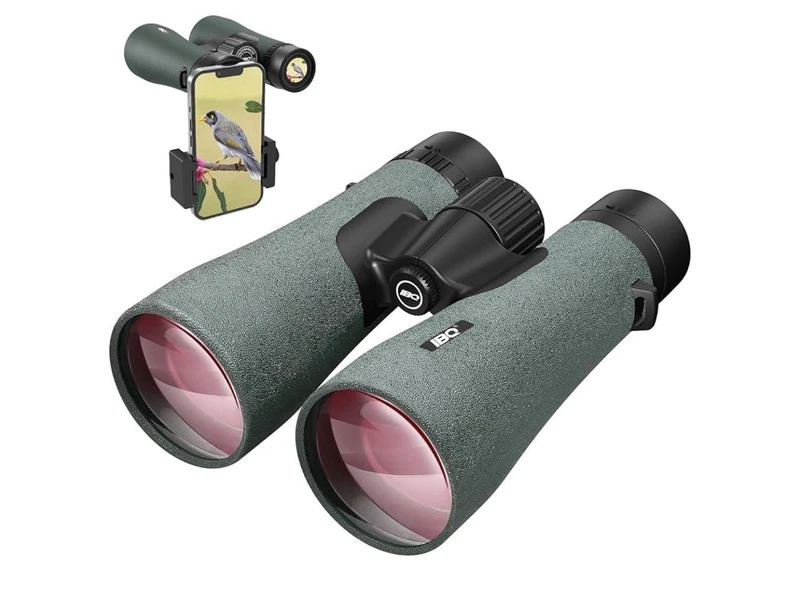
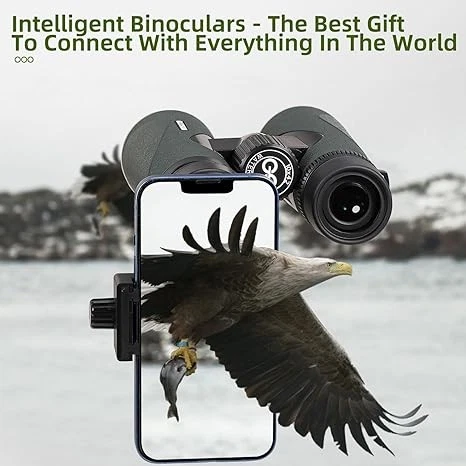
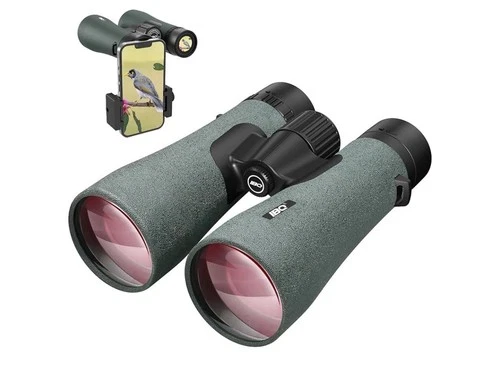
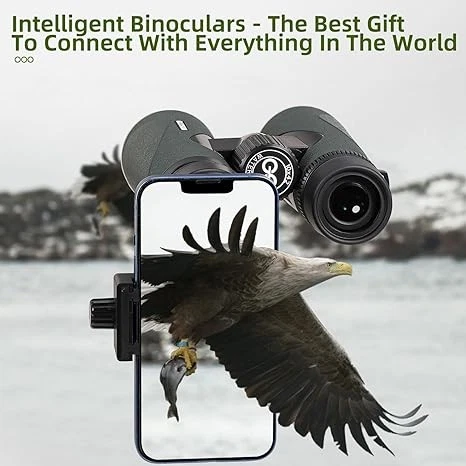
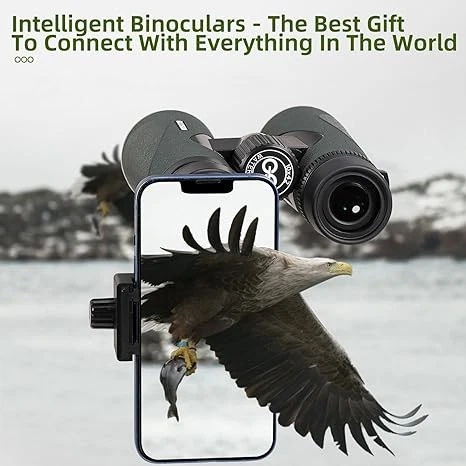
If you want one pair that covers meteors, planets, and daytime use, a 12x50 is the standard answer. The at roughly $99 are the pick here if you are spending properly — the listing specifically names BaK4 prisms, and its maker rates them for stargazing, which is rare to see stated plainly. If you would rather spend less and still get real optics, the at around $62 use the same BaK4 prism glass with FMC coating in a slightly smaller, lighter body, and the listing calls out low-light use directly. For the cheapest useful entry point, the at roughly $40 cover the magnification and aperture basics and include a phone mount for photographing what you find.
One category deserves a warning. Binoculars advertised as "day/night vision" or "auto focus" are usually electronic gadgets with an amplified low-light sensor and a small LCD, not optical binoculars — the at about $53 is one of these. They genuinely work in near-darkness, which is impressive, but they trade away the wide natural field that makes binocular astronomy pleasant. Buy one for tracking wildlife or as a novelty. Buy optical glass for looking at stars.






 $99