Tahabay icon tahabay

Home Strength Training with Dumbbells: What to Buy First in 2026 and How to Use It

Strength training searches keep climbing while gym membership does not. Here is the gear that matters for a home setup, what each type of dumbbell actually does, and how to program your first eight weeks.

Part 1

The gym is losing ground to the spare room

Search data through 2026 shows a pattern worth understanding before you buy anything. Strength-adjacent terms keep climbing: creatine monohydrate and general creatine searches both more than doubled year on year at very high volumes, protein powders rose steadily, home gym bench searches grew, and searches for individual exercises such as the hip thrust grew sharply. Meanwhile the generic category term for fitness trackers fell by a third.

Set against that, the most explosive growth in the whole fitness market was not people joining gyms. It was people opening gym franchises. That is a supply-side signal, not a demand-side one, and it tells you something specific: the appetite for structured, equipped strength training has outrun the number of places you can do it near home.

The practical response is the spare room. And the most common reason home strength setups fail is not laziness. It is buying the wrong equipment, in the wrong order, and then having nothing to do with it.

Everything here is built on real listings with real prices confirmed on October 11, 2026. eBay prices change constantly and vary by seller and condition, so read each listing carefully. If you already own bands and want to know what they can and cannot do, our resistance band home workout guide covers the details. One general note before you start: if you have an existing health condition, are returning from injury, or are unsure where to begin, a qualified trainer is worth an hour of your time.

Tahabay may earn a commission from purchases made through our links, at no extra cost to you.
Part 2

Fixed dumbbells: the standard you should aim at

Fixed dumbbells are the reference point every other option is measured against, and the reason is a single property: the weight does not change. That means you can add load to a movement gradually, which is the entire basis of progressive strength training.

Hex dumbbells with a no-roll shape — $78.78

The octagonal no-roll design is not a gimmick. Round dumbbells roll when you set them down, which turns every repetition that needs a floor or a rack into a small stability problem. This coated hex set at $78.78 describes exactly that design and is the format most commercial gyms use for a reason.

Two 15 lb rubber hex dumbbells — $66.00

A single heavier pair, which serves a specific and useful purpose in a home setup: presses, rows and carries where the load needs to be genuinely heavy. Rubber hex ends also protect your floor better than bare iron, which matters if you live in a flat.

A pair of soft sand-filled dumbbells — $53.99

Soft dumbbells are a different tool, not a cheaper version of the same one. Sand shifts inside the shell, which makes them self-levelling and much gentler on the wrist and elbow than hard iron. That makes them a reasonable choice for a household with hard floors, for balance work, and for anyone who finds rigid dumbbells uncomfortable.

Be clear-eyed about the trade, though: a shifting fill limits how much real load you can handle, which means they cap your progression. Treat them as a complement to hard iron rather than a replacement.

Part 3

Adjustable dumbbells: solving storage and cost

If your storage situation is one shelf, adjustable dumbbells are the obvious answer and the price per pound looks unbeatable compared with buying a full range.

This at $69.95 is the mid-range of the category. The mechanism is simple: plates twist or click into a handle and lock under load. It works, and it keeps working for most people, provided you check the lock before every set rather than assuming it held.

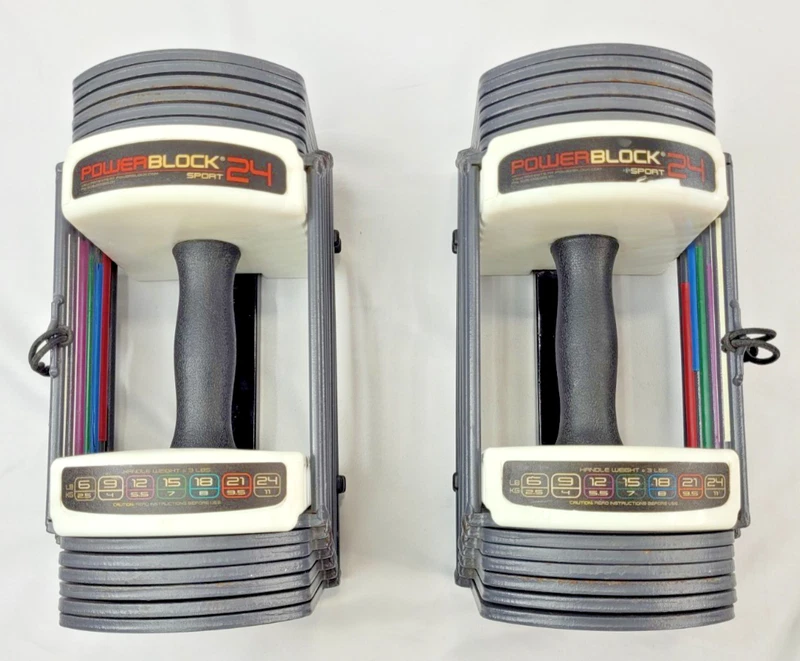
The premium end is a at $200.00. The individual plates are heavier, so the handle flexes less and the weight feels more like fixed iron, and the two-unit format means you can work both hands independently rather than being limited to one adjustable handle at a time. That is the difference that matters once you are training seriously.

The budget version, a at $45.00, ships with a tray and is the format most people buy first. One handle means alternating arms, which slows a session down, but it is honest equipment for the price.

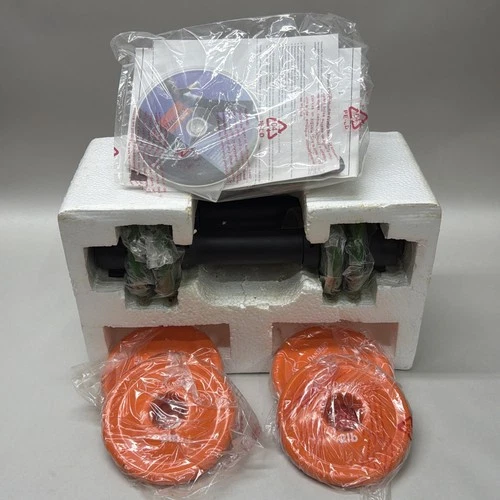
padded 16 lb adjustable dumbbell set$69.95

padded 16 lb adjustable dumbbell set

eBay When checking out, please note that this item may go FED-EX / UPS which CAN NOT deliver this item to a PO Box. We reserve the option to choose the carrier, your address MUST be compatible with both. Danskin Now 16 Lb. Dumbell Set (Total Combined Weight) V

See the live listing →
used Powerblock Sport 24 adjustable dumbbell set of two$200.0

used Powerblock Sport 24 adjustable dumbbell set of two

eBay Powerblock 24lb Sport 24 Adjustable Dumbbell - Set of 2 Pre-owned, very good condition. Plastic handles are in good condition and the steel plates that are part of the adjustable system are in very good condition. Everything functions as it should and ver

See the live listing →
single black adjustable dumbbell with a rubber handle and tray$45.0

single black adjustable dumbbell with a rubber handle and tray

eBay 1 Black Adjustable Dumbbell With Anti Slip Rubber Handle And Tray . Shipped with UPS Ground Saver.

See the live listing →
Part 4

Vintage iron: underrated and genuinely good

There is a category that gets overlooked because it looks old, and it is possibly the best value in home strength training. Vintage cast iron dumbbells were made in an era when the iron was the point.

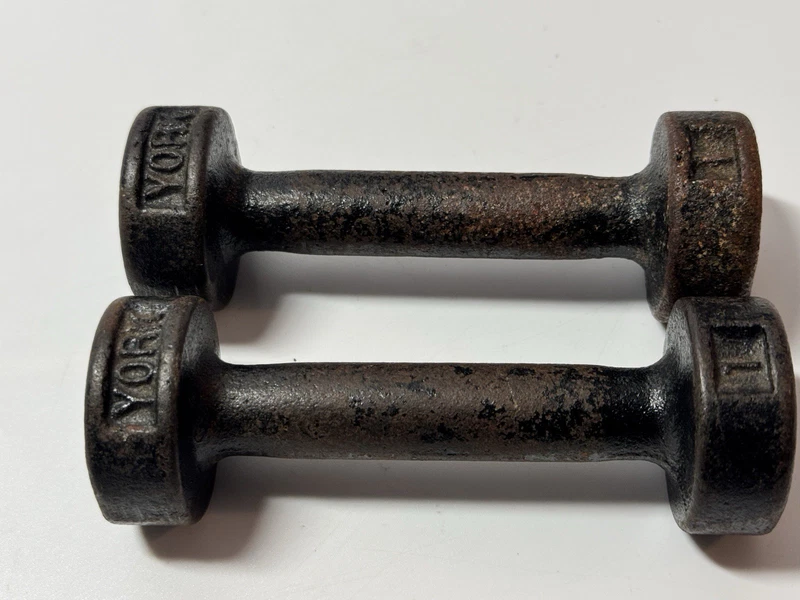
This at $29.50 is small, but the important detail is that vintage sellers usually quote the weight of the whole pair rather than of each dumbbell. That makes a heavy pair look cheap until you do the arithmetic, and it is the single biggest source of surprise in this category.

This at $33.45 shows the classic look. The rust is cosmetic on genuinely old iron, but it does tell you the weights have not been stored well, and a pair with surface rust near the handle holes can make grip uncomfortable until you clean it.

They suit four situations particularly well: a home gym where you want equipment that outlasts you, training in a garage where rust is not a concern, boxing and conditioning work where the smaller traditional sizes are useful, and anyone who prefers the feel of solid iron to a mechanism.

pair of vintage York 1 lb cast iron dumbbells$29.5

pair of vintage York 1 lb cast iron dumbbells

eBay Vintage YORK 1 lb Cast Iron Dumbbells – Pair Pair of vintage YORK cast iron dumbbells, each marked “YORK” and “1 LB.” on the ends. These appear to be older solid cast iron exercise weights with the classic fixed-head dumbbell design. Each dumbbell measure

See the live listing →
pair of vintage cast iron boxing dumbbells at 2.75 lb each with rust patina$33.45

pair of vintage cast iron boxing dumbbells at 2.75 lb each with rust patina

eBay Vintage Cast Iron Boxing Dumbbells Pair 2.75 lb Each — Rust Patina Weights ⸻ Description: Pair of vintage cast-iron dumbbells originally used for boxing and strength training. Each weighs about 2.75 lb (1.25 kg). These solid one-piece weights date from th

See the live listing →
Part 5

Resistance bands: not a dumbbell substitute

Bands are the most widely mis-sold item in home fitness. They are not a cheaper dumbbell. They are a different tool with a different job, and the listings in this category describe that job accurately when you read them.

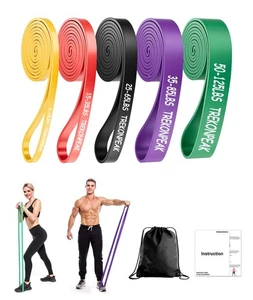
This at $26.73 is the complete starter configuration, and the door anchor is the part that transforms it from a desk toy into a usable back and shoulder training tool.

Pull-up assistance is where bands have no competition. This at $29.24 is rated by level rather than by a single resistance figure, which is the correct way to buy one, because you will need to drop a level as you get stronger rather than fight the thickest band.

Two other formats worth knowing. A at $13.00 is the cheapest genuinely useful kit in this entire roundup, and a at $49.99 buys latex that lasts far longer than the generic tubing in budget sets, which is where the real difference between a 50 dollar and a 15 dollar band set lives.

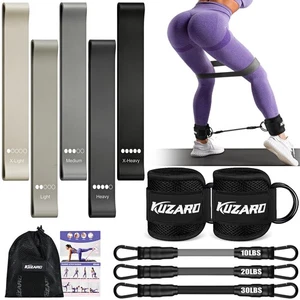
For glute and lower-body work, a at $33.71 covers the movements that most home gym setups are missing entirely.

five-band set with handles, protective sleeves and a door anchor$26.73

five-band set with handles, protective sleeves and a door anchor

eBay Complete Set for Convenience and Advanced Exercise: You'll get 5 resistance bands, 2 protective sleeves, 1 door anchor, 2 handles, 1 instruction manual, and 1 storage bag. Protective sleeves and handles can protect your hands and get advance exercise. Eve

See the live listing →
five-level pull-up assistance band set$29.24

five-level pull-up assistance band set

eBay ACM Group - Product Listing Resistance Bands for Working Out, 5-Levels Exercise Band Set, Pull Up Assistance Bands-Strength Training Physical Therapy Stretching Women Men Home Gym SHOP FEEDBACK CONTACT - Product Description - Latex-Free Material: Our resi

See the live listing →
10 to 150 lb resistance band set$13.0

10 to 150 lb resistance band set

eBay Enhance your workout routine with this high-quality Resistance Band Set. Perfect for home use, this set includes a variety of bands made from durable Thermoplastic Elastomer (TPE) material in 10~150LBS Colour. The set is designed to target various muscle

See the live listing →
Theraband-style high-resistance set of two$49.99

Theraband-style high-resistance set of two

eBay Theraband High Resistance Bands, Set of 2 Elastic Super Bands for Improving Flexibility, Injury Rehab, & Full Body Workouts, Heavy Duty Stretch Bands for Lifting

See the live listing →
resistance band set with ankle cuffs and a glute band$33.71

resistance band set with ankle cuffs and a glute band

eBay Resistance Bands Set, Ankle Resistance Band with Cuffs & Glute Exercise Band, Description Features: One Kit, Endless Results resistance bands set:3X resistance bands for working out 10lbs/20lbs/30lbs, to help you easily start your daily workout. portable

See the live listing →
Part 6

The order to buy in

  1. Two adjustable dumbbells, or one fixed pair in the 15 to 25 lb range. This is the only genuinely essential purchase. Everything else is an addition.
  2. A set of resistance bands with handles and a door anchor. Under 30 dollars, and they cover stability work, warm-ups, rows and pull assistance that dumbbells cannot.
  3. Space for a bench, or a stable step. Not needed in week one. Worth buying once you are pressing real weight and want the same position every time.
  4. A second, heavier fixed pair. This is the purchase most people make too early and regret. Buy it when the first pair becomes too light, not before.
  5. Everything else. Products advertised for specific body parts, for fast results, or for a specific sport you do not practise are almost always a purchase you will make twice.
Part 7

A simple eight-week structure for a beginner

You do not need a complicated programme. You need one you will repeat, with a small increase every week or two.

  • Weeks 1 to 4: two sessions a week. Six movements, three sets each, choosing a load where the last two repetitions are genuinely difficult but the form holds. Squat pattern, hip hinge, push, pull, and two carries or core movements.
  • Add one thing per week. One extra set, one extra repetition, or slightly more weight. Not all three.
  • Weeks 5 to 8: three sessions a week. Add a fifth movement and begin working one movement to a harder effort on its own day.
  • Record everything in one place. The weight, the repetitions and the date. A log you do not keep is the same as no log.
  • Leave a day between sessions. Recovery is when the adaptation happens, and training hard on poor sleep and no food is the most common self-inflicted stall in home strength training.
  • Stop a set when the form breaks. Two clean repetitions are worth more than six broken ones, and the numbers that count in a log are the ones you can repeat.
Part 8

What about protein and creatine?

They are the two most searched fitness topics in the current data, so it is worth being clear about their place. They are not a substitute for training, and no amount of either will build strength in someone who is not lifting. Their role, if your goal is strength and you are training properly, is supporting recovery and training capacity between sessions.

Two practical points that have nothing to do with any product. First, they are not magic and they do not work on everyone, and the effect sizes involved are modest and take weeks to accumulate. Second, if you have any medical condition or take medication, talk to a pharmacist or doctor before starting anything. This guide is about equipment and programming, and it is not medical or dietary advice.

Buy the dumbbells first. Everything else comes after you have a programme that works.

Part 9

How to choose a weight range, and why beginners overbuy

The most common purchasing error in home strength training is buying heavier than you can control, usually because the heavier pair looks more serious on a shelf and costs more.

Here is the reasoning. When you can no longer control the last few repetitions, you are no longer training the movement, you are training the compensation in your body to finish a bad rep. Progress comes from adding load to a movement you can execute cleanly, which means starting lighter than your ego suggests and adding weight only when the form holds on the final repetition.

A range that finishes around 20 to 25 pounds per hand is the most commonly useful starting point, because most people can train with that for several months before it stops being challenging. A single heavier pair is a sensible later purchase. Vintage and small iron, which people often assume are inferior, are actually ideal for exactly this reason.

One more consideration on pairs: buying two identical dumbbells rather than one adjustable handle roughly doubles what you can do. With one adjustable handle you are limited to alternating arms, which turns every bilateral movement into twice the set time. With two of anything, you can work both hands at once, which is how most training is actually structured.

Part 10

Five mistakes that waste the budget

  • Buying a mechanism before a load range. An adjustable set that tops out below your current ability is worse than fixed iron, because you will outgrow it without noticing.
  • Buying products tied to one body part. Anything advertised for a specific shape, a specific age or a specific speed of results is a purchase most people make twice.
  • Ignoring the floor. Dropping iron onto a hard floor is the standard reason people quit, and it damages the floor too. Any mat or platform, or simply a wooden board, changes the whole experience.
  • Buying storage as an afterthought. The constraint that stops people training is the ten seconds it takes to clear the corner of the living room. Choose a dumbbell rack or a storage solution on day one.
  • Starting a programme with twenty exercises. Six movements performed consistently for eight weeks will beat twenty movements attempted for two weeks, and it is not close.
Part 11

The bottom line on home strength training

The equipment ranking for a home setup is stable and well understood. Fixed iron teaches progression best and adjustable dumbbells solve storage best. Bands are essential for pull work and assistance work and useless as a replacement for loading a squat. A bench is a third-month purchase. Anything marketed around a specific body part or a specific speed of results is a purchase you will make twice.

Prices confirmed October 11, 2026, but eBay prices change and vary by seller and condition, so strike while a listing you like is live. Vintage iron and secondhand adjustable dumbbells are the two areas where a careful buyer still finds genuine value, and both reward checking the stated weight carefully.

Two dumbbells, a band set, and eight weeks of showing up. That is the whole programme, and it beats any equipment list.

Questions

Frequently asked questions

Are dumbbells better than resistance bands for a home gym?

Dumbbells are better for loading specific muscle groups progressively, which is what most strength training consists of. Bands are better for stabilisation, warm-ups, pull assistance and travelling, because they weigh almost nothing and come in a bag. Most home setups end up using both.

Are adjustable dumbbells worth it?

They solve a storage problem and a cost problem at once, and they are a sensible first purchase in a small flat. The trade is that the mechanism loosens over time and the weight range is limited at the top end, so a serious lifter eventually adds fixed iron.

What weight should a beginner buy?

A range that ends at roughly 20 to 25 pounds per hand is the most commonly useful starting point, because it leaves room to progress for most people for months. Buying heavier than you can control usually leads to slower progress, not faster.

How often should I train at home?

Two or three sessions a week with at least a day between them is the pattern that most consistently produces progress, because it allows recovery. Five days of different exercises without rest mostly trains recovery, not muscle.

Do I need a bench?

Not for the first several weeks. A floor, a chair or a stable step works for most pressing and rowing patterns. A bench becomes useful once you are adding weight to pressing movements and want a stable, repeatable position.

Are vintage iron dumbbells worth buying?

They are genuinely excellent equipment, and vintage listings are usually sold by weight rather than by set. The catch is that a pair can weigh substantially more than the number on the listing suggests, so check whether the stated weight is per dumbbell or per pair.