Tahabay icon tahabay

Daylight Saving Time Ends 2026: A Two-Week Sleep Reset That Actually Works

Clocks go back on October 25 across most of Europe and November 1 in the United States. Here is what happens to your body clock, why the first three nights are the hardest, and the gear that makes the reset faster.

Part 1

The clocks go back in three weeks, and that is the easy part

The dates are simple. On Sunday 25 October 2026, most of Europe and the United Kingdom move back an hour. On Sunday 1 November 2026, the United States, Canada and Australia do the same. Every year, a large share of the population reports the same three symptoms: difficulty falling asleep for the first few nights, waking at the wrong hour, and a vague sense that evenings are arriving too early.

It is worth being precise about why, because the explanation determines what actually helps. Your body does not read the clock on the wall. It runs on a rhythm roughly twenty-four hours long, anchored by two things: light, particularly light in the first hour after waking, and your wake time itself. The clock change does not move either of those anchors. It moves the relationship between them and the time on your wall, and for about a week your body and your schedule are describing two slightly different days.

The fact that people struggle with the autumn shift far more than the spring one is not folklore. Spring gives you an hour stolen in the morning, which is mildly unpleasant but resets the clock in the same direction the sun is already moving. Autumn hands you an extra hour of early evening light, which is a signal pushing you later at exactly the point your body wants to pull earlier.

This guide is about getting through that week with less disruption. It uses real gear listings with real prices confirmed on October 11, 2026. eBay prices change constantly and vary by seller and condition, so check each listing before you commit. If your sleep problem is not seasonal but a permanent one, our weighted blanket guide covers a different tool entirely.

Tahabay may earn a commission from purchases made through our links, at no extra cost to you.
Part 2

Week one: hold three things steady

The most effective intervention is not buying anything. It is refusing to let the extra hour move your schedule.

  1. Keep your wake time identical, including the weekend. Wake time is the strongest anchor available to you. If you protect it, bedtime sorts itself out within a few days. If you shift it by two hours at the weekend, you are running a fresh jet lag every seven days.
  2. Get outside within an hour of waking. Outdoor light is far more effective than indoor light at setting the clock, even on an overcast October morning. Ten minutes is a reasonable target.
  3. Dim the house in the evening. The extra hour after the change is bright and active, and it works against you. Lower lamps, close curtains and avoid bright overhead lighting in the two hours before bed.

Most people who do only these three things feel normal by the fourth or fifth night. Those who stay up until two, then sleep in until noon, then try to correct again, are effectively resetting the clock every weekend and never finish.

Part 3

Why the bedroom suddenly matters more in autumn

Here is the specific problem with the autumn change, and it has a straightforward physical cause. Before the clocks go back, your 10pm bedtime means darkness. After the change, your 10pm bedtime happens while it is still fully light outside, and the light coming through the window is exactly the wrong signal at exactly the wrong moment.

The result is that the extra hour becomes wakefulness rather than sleep. Blocking that light is the highest-return change available, and it is a one-afternoon job.

Blackout curtains: the highest-return single change

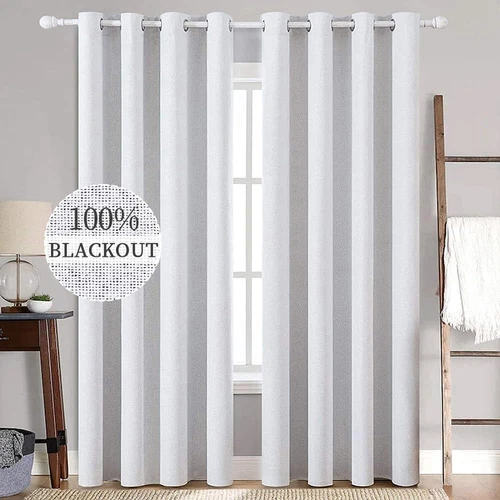
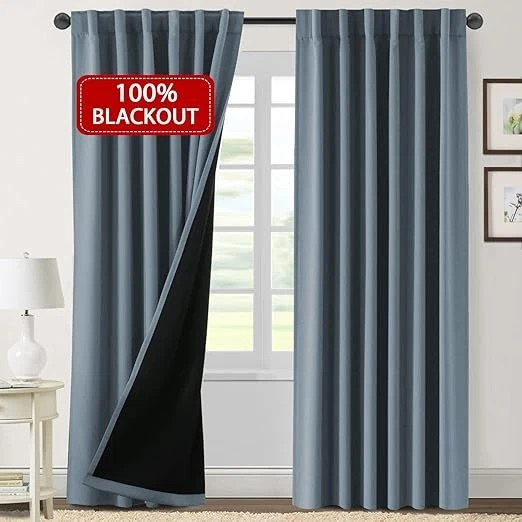
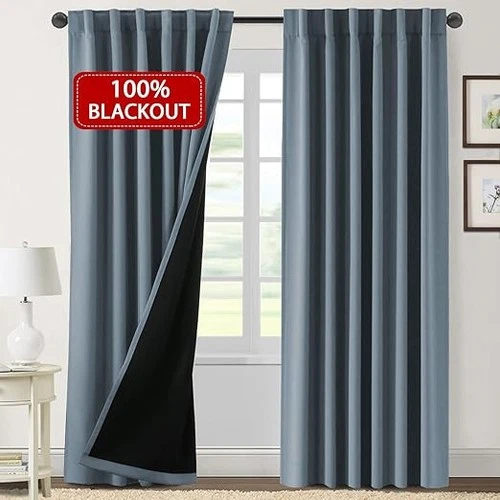
Curtains are the cheapest and most effective intervention, and the secondhand market has an unusually good selection because people move house constantly. A at $18.00 is the budget answer and does the job if the windows are not oversized. Better-made options include this at $47.22 and this at $47.96, both described as thermal insulated as well as room darkening.

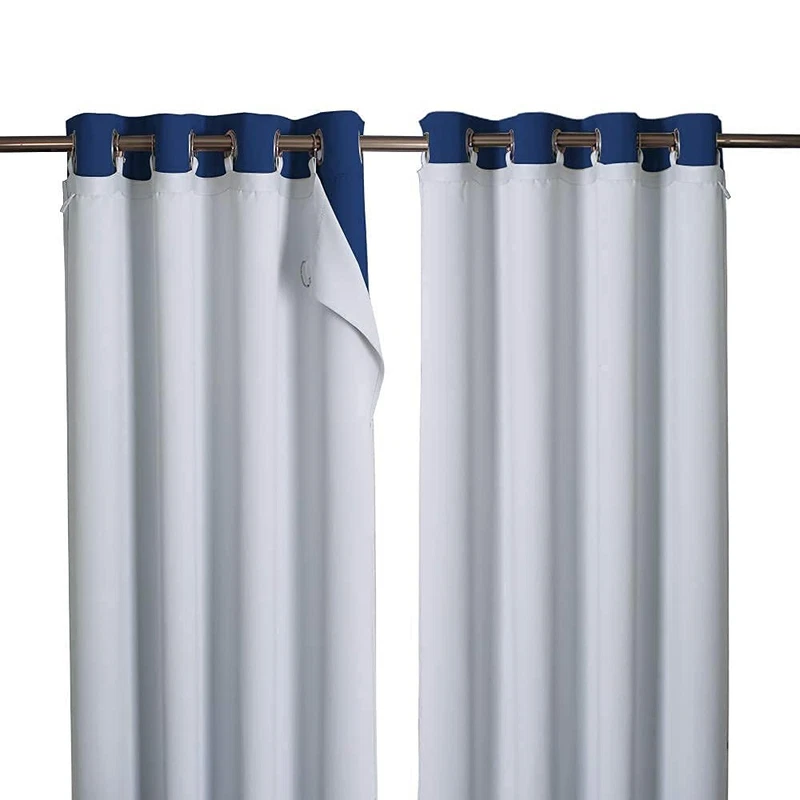
If you cannot or do not want to replace your curtains, liners solve most of the problem. These at $26.47 are designed to hang behind existing sheer curtains, which is the cheapest possible version of the fix and takes twenty minutes.

The second half of the room is the other one that matters. A dark ceiling, a dark floor and a glowing standby light are all enough to pull someone fully awake at two in the morning, which is precisely the failure mode of a longer autumn night. Covering standby LEDs is a five-minute job with electrical tape and costs nothing at all.

set of two blue-gray 84-inch blackout curtain panels$18.0

set of two blue-gray 84-inch blackout curtain panels

eBay These 100% Blackout Curtain Panels in Blue-Gray are a set of 2 panels with a back tab and rod pocket heading, measuring 84 inches in length and 52 inches in width. Made of polyester, these modern panels are designed to reduce noise and provide thermal ins

See the live listing →
MIULEE beige velvet blackout curtain pair$47.22

MIULEE beige velvet blackout curtain pair

eBay Hammer Time Auctions MIULEE Beige Velvet Pencil Pleat Darkening Curtains for Bedroom 2 Panel Set, Super Soft Luxury Home Decor Living Room, Thick Room Darkening Curtains 90 Drop, Each 90 x 90 Inche New Brand : MIULEE Colour : Beige Type : Curtain Format :

See the live listing →
MIULEE white linen-textured blackout pair$47.96

MIULEE white linen-textured blackout pair

eBay MIULEE White Blackout Curtains Linen Textured for Bedroom Nursery Thermal Insulated Room Darkening Grommet Curtains/Drapes for Living Room Decoration 52x84 Inch Grayish White 2 Panels ✓ Free 30 Day Returns ✓ Free Express Shipping Description: Features: SI

See the live listing →
blackout curtain liner panels$26.47

blackout curtain liner panels

eBay Are you looking for special blackout curtains? Do you need curtains with blackout function but still want to keep your old ones? Blackout Curtain Liner is a multi-functional curtain, it can be used together with other kinds of curtains and also can be use

See the live listing →
Part 4

Using light deliberately: the morning lever

Light is the strongest input your body clock takes, and in autumn your options narrow fast because the sunrise gets later and the sky stays grey. A bright light source used in the first hour after waking is the most commonly recommended addition to a morning routine, and it is also the easiest to overspend on.

Light therapy lamps, and how they differ from red light panels

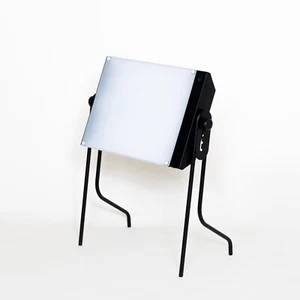
What matters in a light-therapy lamp is brightness at the point you sit, measured in lux at the desk, and UV filtering. This at $255.00 is the serious end of the category and states a 10,000 lux output, which is the number that matters rather than the wattage. If you sit a sensible distance from it for 20 to 30 minutes each morning through the darker months, it is a genuinely well-made instrument.

One important distinction, because the two categories get constantly confused online: a light-therapy lamp is for timing, while a red light panel is for skin. Red light panels and masks are a separate and much larger market, and they are not a substitute for morning light if your question is sleep timing. This at $40.00 is a skin-oriented panel, and this at $80.00 is the same category again. Neither should be bought expecting a circadian benefit.

If the expense is not justified for a one-week transition, the free version is genuinely close: sit by a south-facing window for twenty minutes with your face toward the glass while you make coffee. On a clear autumn morning that is closer to ten thousand lux outdoors.

Northern Lights BOXelite OS bright light therapy desk lamp$255

Northern Lights BOXelite OS bright light therapy desk lamp

eBay The BOXelite OS The BOXelite is an ideal desk lamp for bright light therapy. It puts out 10,000 Lux at a very comfortable, class-leading distance of up to 14 inches. The OS version comes with legs so the light shines down into the eyes like the sun. The B

See the live listing →
Viconor red light therapy lamp with stand$40

Viconor red light therapy lamp with stand

eBay Viconor red light therapy lamp with stand for face and body. 120 LEDs combining 660nm red light and 850nm near-infrared light. Curved panel design focuses the light for better coverage. Adjustable stand, use in living room, office, bedroom or beauty salon

See the live listing →
red light therapy face mask$80.0

red light therapy face mask

eBay Red Light Therapy Mask for Face - FDA-Cleared 400-850nm LED Red & Near-Infrared Light for Skin Rejuvenation, 8 Skin Care Modes, Home Beauty Device, Relaxing Birthday Mother’s Day Gifts for Women

See the live listing →
Part 5

Controlling the evening with a timer you do not have to remember

The evening half of the routine is mostly a matter of remembering to do things. Plugs and lights that schedule themselves remove the remembering, which is why they work better than willpower.

Smart switches and strips: the evening handled for you

A at $28.50 is the general answer: schedule a floor lamp or a heater to switch off at a fixed time, and the room changes whether or not you remember. A at $29.99 does the same for outside lights, which matters more than people expect because an outside light left on under a dark sky is a wake-up signal at three in the morning.

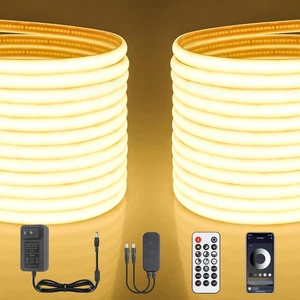
For ambient light, dim and warm beats bright and cool. This at $120.99 is the quality option, while this at $23.45 does the same job for a bedroom at a fraction of the cost. The colour temperature is the specification that matters: 3000K is warm and restful, and a 6500K white strip in a bedroom is the opposite of what you want at night.

two-pack of WiFi smart plugs with fire-resistant outlet timers$28.5

two-pack of WiFi smart plugs with fire-resistant outlet timers

eBay Smart Control from Anywhere: Remotely control lights, appliances, & electronics with this WiFi smart plug outlet using the Geeni app. Whether you're home or away, manage devices through your or use voice commands with Alexa or Google Assistant. Compact De

See the live listing →
GE plug-in outdoor smart switch timer with Bluetooth$29.99

GE plug-in outdoor smart switch timer with Bluetooth

eBay GE 13868 Plug-in Outdoor Smart Switch Timer Bluetooth Black New In Box

See the live listing →
dimmable COB LED strip, 65.6 feet, waterproof$120.99

dimmable COB LED strip, 65.6 feet, waterproof

eBay Need more than the quantity listed? Message us! Dimmable 24V COB LED Strip Lights 65.6FT Waterproof for Indoor & Outdoor Use Description Light Source Type LED Style Modern Number of Items 2 Power Source DC Number of Light Sources 6400 Control Method App,

See the live listing →
174-foot waterproof LED strip in 3000K warm white$23.45

174-foot waterproof LED strip in 3000K warm white

eBay Battiwale 120-LED Strip Lights 174' — 12V DC 2835 SMD Warm White (3000K), Waterproof & Dimmable, Remote/App/Voice Control — Ideal for Bedroom, Living Room & Kitchen

See the live listing →
Part 6

Waking up: gradual versus abrupt

The other half of a shifted night is the morning. Plenty of people find that an abrupt alarm against a shifted schedule is what turns three difficult nights into a ruined week.

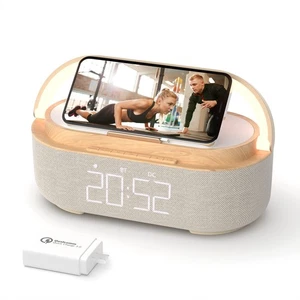
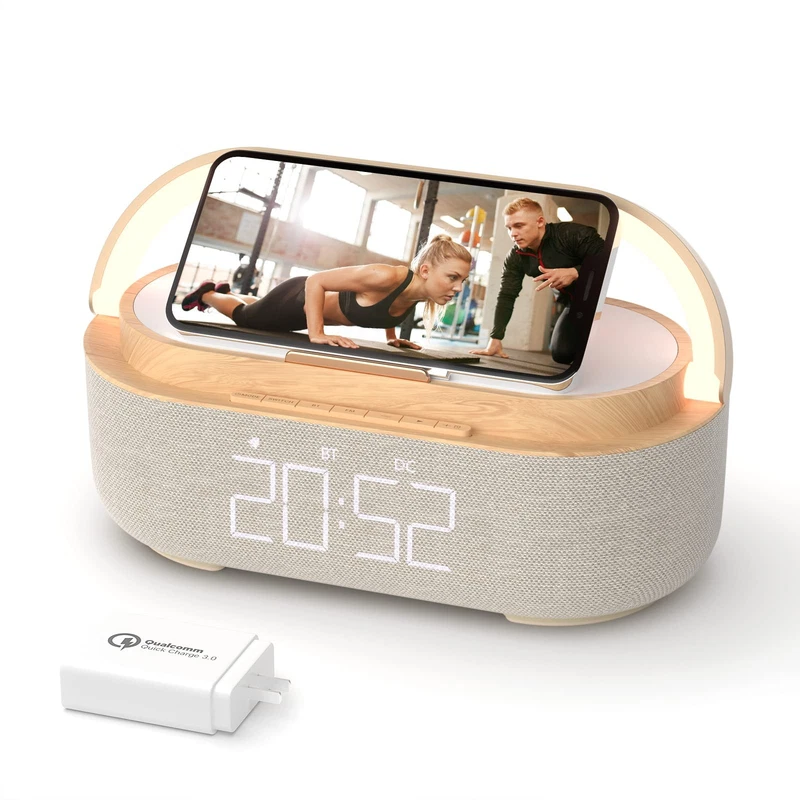
A gradual wake-up is a personal preference rather than a medical question, and it is worth testing for two weeks rather than judging in one morning. This at $84.15 is a bedside clock with a built-in speaker, a display and a charging pad, which covers the practical side of a gentler morning if your current alarm is a phone.

Waking up: gradual versus abrupt

There is a cheaper intervention that works just as often. Put the alarm somewhere you cannot reach it without standing up. The point is not the sound, it is the fact that standing up is the first movement of the day, and morning movement plus morning light is the combination that anchors everything after it.

COLSUR Bluetooth speaker alarm clock with wireless charging$84.15

COLSUR Bluetooth speaker alarm clock with wireless charging

eBay COLSUR Bluetooth Speaker Alarm Clock with Wireless Charger, FM Medium, Beige Product Details 【6 IN 1 Multifunctional Alarm Clock Design】- You can get Bluetooth speaker+Digital Alarm Clock+15W Wireless Charger+FM Radio + 4-level adjustable night light + Ph

See the live listing →
Part 7

Ten practical rules for the fortnight

  1. Keep the same wake time on the changeover Sunday, even though it feels wrong.
  2. Do not go to bed an hour early in advance. Let the hour arrive.
  3. Get outside within an hour of waking, every day, including bad weather days.
  4. Block bedroom light properly. This is the highest-return single change.
  5. Dim the house from roughly two hours before bed.
  6. Schedule the outside lights to switch off automatically.
  7. Keep caffeine out of the second half of the day for the first week.
  8. Do not use the extra evening hour for anything exciting. That is precisely the hour you should be losing.
  9. Expect three hard nights and then a rapid improvement. Most people are fine by day seven.
  10. If you are still struggling after two weeks, the clock was never the problem. Look at light, noise and caffeine instead.
Part 8

The first seventy-two hours, hour by hour

The autumn change is not a gradual drift. It is three specific nights that most people describe identically, and knowing the shape of them in advance is most of the battle.

The night of the change. You lose an hour of darkness, not of sleep. Almost everyone goes to bed at their usual time, and almost everyone then finds they are awake an hour later than expected. That extra hour is spent lying in a dark, quiet room with nothing to do, which is genuinely frustrating. The correct response is not to fight it and it is not to get up and start the day at three in the morning. It is to accept that this night is unusual and to go to bed at your normal time regardless.

The next morning. This is the part that actually determines the week. Wake at your normal time. Not an hour later, not an hour earlier. If the changeover Sunday was the one night you sleep in, the next ten days have already been decided.

Days two and three. You will feel a mild evening fatigue you cannot shake, because your body still expects darkness at a time that is now bright. This is the phase where most people quit the schedule and go to bed at nine, which resets the clock backwards and guarantees a second bad week.

Day four onward. For most people the rhythm snaps back, and the strongest signal that it has worked is simply that you stop noticing the time of day at all. Anyone still struggling at day ten is looking at the wrong variable, and light and noise are far more likely culprits than the clock.

Part 9

Why the evenings feel wrong, and what to do about it

There is one specific quirk of the autumn change that deserves its own explanation, because it is the part people find hardest to talk about and the easiest to fix.

For about a week after the clocks go back, the sun sets while you are still awake and eating dinner. Your body is ready for the evening it was expecting, the light is bright and blue, and everything in the environment is telling you it is earlier than it was. That combination is a genuine, measurable effect on alertness, not a mood or an attitude problem.

The remedy is environmental rather than psychological, and it is cheap. Lower the brightness of the room in the last two hours before bed. Close the curtains while there is still daylight outside. Avoid the brightest overhead light in the evening if the house has alternative lighting. Keep the same routine you have, but perform it in a dimmer room.

This is also where the automatic switches earn their money. A schedule that dims or switches off the lights at a fixed time does not require you to remember a decision at the end of a long day, and the decision is the part that fails. A plug that switches the main lamp off at half past ten works on the evenings when you are tired enough that you would not have done it voluntarily.

Part 10

The bottom line on the daylight saving change

The clocks going back is a scheduling problem before it is a sleep problem, and the scheduling problem is solved by protecting your wake time. The equipment that genuinely helps falls into three groups: blackout curtains that turn the extra hour into sleep, a bright morning light source that re-anchors the clock, and automatic switches that stop the evening from running bright.

Prices confirmed October 11, 2026, but eBay prices change and vary by seller and condition. The good news about this particular week of the year is that none of the products above are seasonal, so there is no reason to wait for November pricing. Buy the curtains this weekend.

Same wake time, dark room, bright morning. Everything else is detail.

Questions

Frequently asked questions

When do the clocks go back in 2026?

On Sunday 25 October 2026 across most of the EU and the UK, and on Sunday 1 November 2026 in the United States, Canada and Australia. The relevant date is the Sunday, because the night before is the one that suddenly becomes an hour longer.

How long does it take to adjust to the clocks going back?

Most people feel the worst of it on the first three nights and are broadly settled within a week to ten days. The adjustment is easier if you already keep a consistent wake-up time, because the wake time anchors everything else.

Does light in the morning help?

Morning daylight is the strongest single signal your body uses to set its clock. A bright lamp used shortly after you wake, plus daylight through a window, tends to shorten the adjustment compared with evening light and an irregular wake time.

Should I sleep an extra hour on the night the clocks go back?

Not as a strategy. Keeping the same wake time and letting the extra hour arrive naturally generally settles the rhythm faster than deliberately going to bed an hour earlier, which moves your body clock in the opposite direction.

Do blackout curtains really matter?

Yes, and they matter more in autumn than at any other time of year, because the extra hour you gain is full of early evening light. A room that blocks light well turns that extra hour into sleep rather than into wakefulness, which is the single most reliable change most people can make.

Is a sunrise alarm better than a normal alarm?

Many people find that a gradual wake-up is easier to get out of bed against than an abrupt one, particularly when the schedule has just shifted. It is a comfort and habit change rather than a medical intervention, and whether it works is genuinely personal.