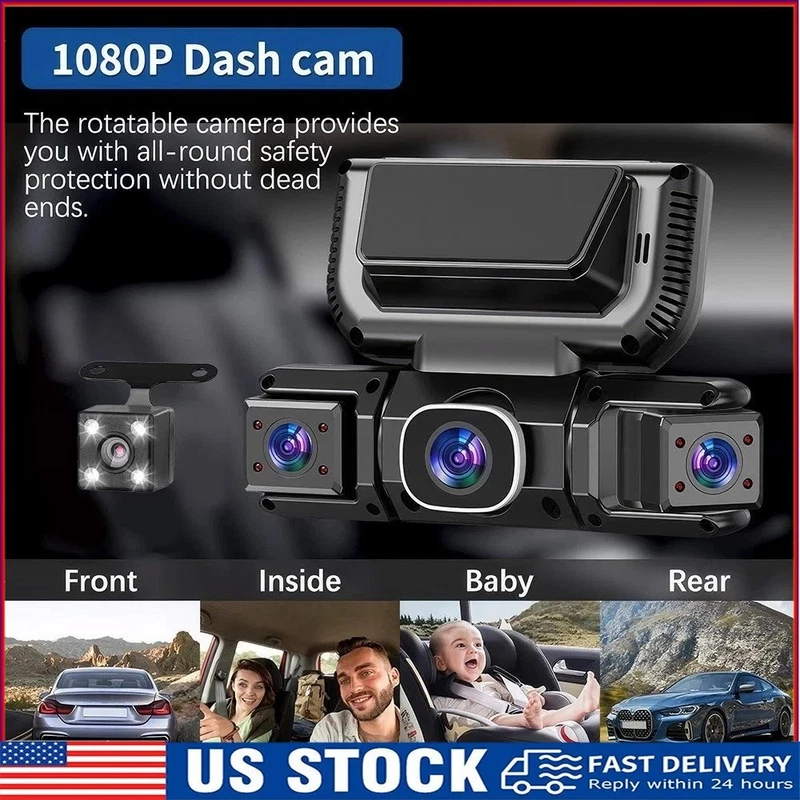
Everything else on the spec sheet is a refinement. This is the choice that determines whether the footage is useful.
Single channel
One camera, forward facing. It records the road ahead, which is the most common single point of contact in a crash. It is the cheapest category and it is adequate for basic insurance evidence.
The limitation is obvious in hindsight. In a rear-end collision the front camera records an entirely ordinary drive. In a side impact it records very little. If your vehicle has anything mounted at the rear — a bike rack, a tow bar, a load — a front-only camera cannot see it at all.
Dual channel: front and rear
Two cameras, one recording forward and one rearward. This is the configuration most people should buy, because it covers both the most common crash types and most of what you actually need as evidence.
A dual lens dash cam recording front, rear and cabin at 1080p is the standard shape of this category and sits at the affordable end. The adds resolution on the forward channel, which is where it is most useful.
Triple channel
Front, rear and inside the cabin. The third camera watches the cabin, which means it captures the driver as well as the road.
This matters in two situations specifically. Insurance disputes where a driver is accused of distraction, and any incident involving a passenger. It is also the configuration most likely to raise a privacy consideration with anyone else in the vehicle, which is worth thinking about before you fit one.
The is the typical product. Note that a three-channel camera is writing three times as much data, which is why the memory card decision becomes much less optional.
Four-channel and 360-degree models
A handful of units add a fourth camera or a stitched 360-degree view. The stitched version removes the blind spots that single forward-facing cameras have, but it produces fisheye distortion at the edges and needs careful mounting to avoid an unusable seam. The is the product to look at if you park in genuinely risky places.
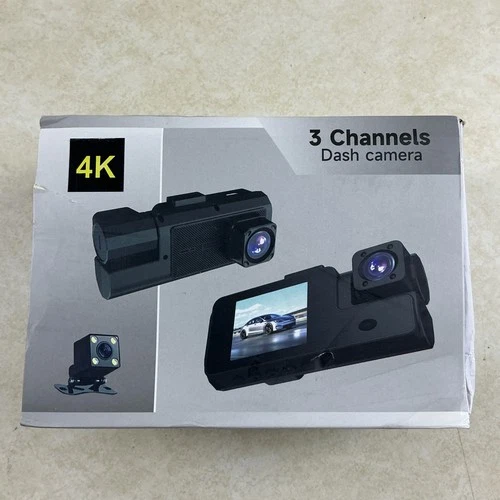


 $24.99